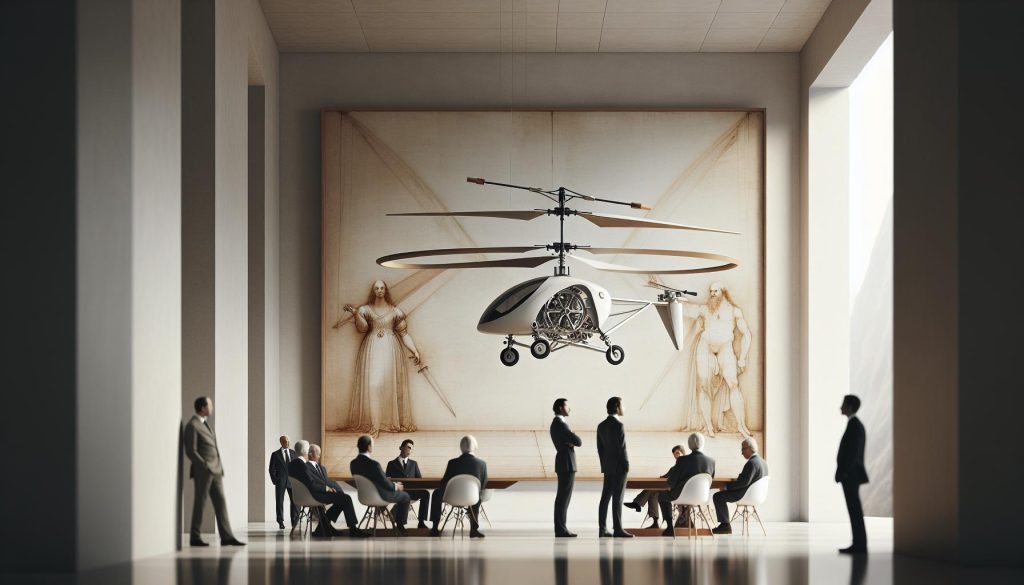
Did you know that Leonardo da Vinci sketched designs for a flying machine over 500 years ago? His remarkable vision paved the way for modern aviation, even hinting at what would later be realized as the helicopter. This exploration not only delves into da Vinci’s innovative genius but also connects us to the ongoing quest for flight that has captivated humanity. Understanding his concepts allows us to appreciate the blend of art and science in aviation history. With every rotor spin, helicopters continue to embody the strides made since the Renaissance, inspiring aspiring pilots and aviation enthusiasts alike. Join us as we unveil the fascinating intersection of art, innovation, and engineering that began with da Vinci’s dreams of soaring through the skies.
Did Leonardo da Vinci Really Design the Helicopter?
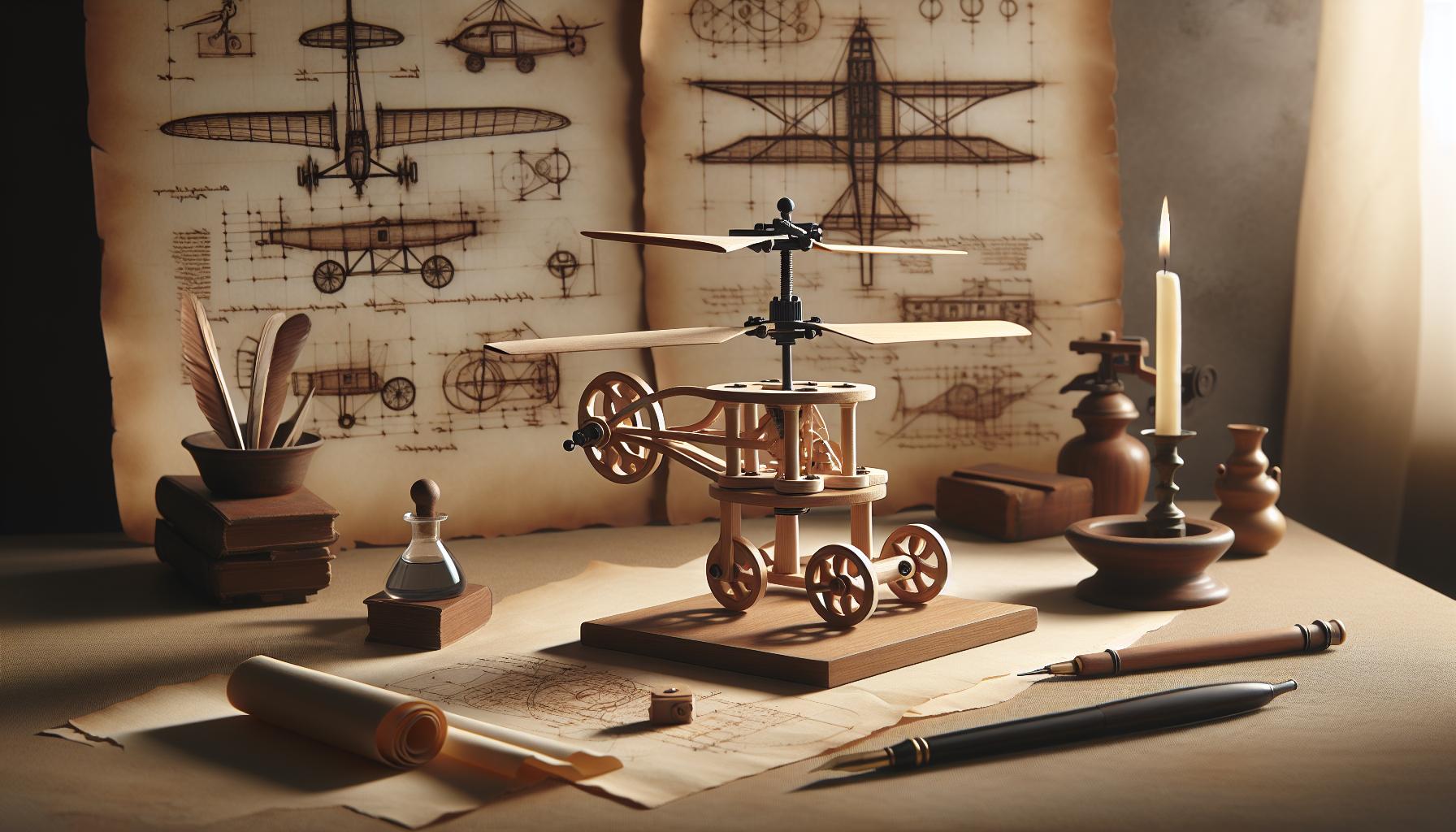
Leonardo da Vinci’s fascination with flight has tantalized scholars and aviation enthusiasts alike for centuries. Among his intriguing inventions sketched in the late 15th century is a concept that eerily resembles what we now know as the helicopter. Often referred to as the “helical air screw,” this design features a spiral shape made of reed, linen, and wire, aimed at mimicking the principles of vertical flight. While da Vinci never constructed a working model, his visionary sketches laid foundational ideas that would eventually influence the development of modern aviation.
The “helical air screw” reflects da Vinci’s deep understanding of aerodynamics, even though the technology of his time did not allow for its realization. His drawings suggest that he was aware of the necessary principles of lift and torque; however, achieving powered flight with the available materials and knowledge was impossible. This inventive spirit demonstrates da Vinci’s ability to conceptualize ideas far ahead of his time.
Ultimately, while da Vinci did not invent the helicopter, his sketches and exploration of vertical flight mechanics provide a glimpse into the mind of a truly innovative thinker. This visionary perspective inspired later aviation pioneers, encouraging them to combine art and science in their quest for powered flight. Da Vinci’s legacy in the field continues to remind us that the dreams of yesterday can shape the realities of tomorrow.
Exploring Da Vinci’s Renaissance Innovations
Leonardo da Vinci’s contributions to science and engineering exemplify the extraordinary creativity of the Renaissance. This era, marked by a rejuvenation of learning and discovery, allowed da Vinci to explore concepts that were, at the time, astonishingly ahead of their time. Among these innovations is his design for the “helical air screw,” often regarded as a precursor to modern helicopter technology. While his aircraft designs weren’t realized during his lifetime, they reveal insights into the principles of flight and the potential for vertical lift, concepts that lingered in the imaginations of inventors for centuries.
Da Vinci’s sketches, meticulously detailed, reveal his observations of nature and physics. He understood the dynamics of air and how shape and materials could interact with it, thus laying the groundwork for future aeronautical advancement. His “aerial screw” design, with its conical shape made of materials like reed, linen, and wire, was intended to operate on the principle of lift, much like a helicopter blade does today. This reveals not only his innovative spirit but also a keen understanding of what would eventually become fundamental aerodynamic principles.
Innovative Techniques and Concepts
Throughout his notebooks, da Vinci employed various sketching techniques that combined art and engineering. This intersection allowed him to visualize and document ideas that might otherwise have remained theoretical. For example, his drawings explored *helical* shape variants and potential mechanisms for propulsion. These explorations emphasized the importance of observation and experimentation, principles that continue to inspire engineers and scientists.
Furthermore, da Vinci’s enthusiasm for flight extended beyond mere designs; he passionately studied bird anatomy, which informed his understanding of how wings operate. He found inspiration in nature, demonstrating the Renaissance belief in observation as a pathway to knowledge. Such insights prompted later generations of inventors to explore powered flight and mechanical capabilities in deeper ways.
Ultimately, while da Vinci did not invent the helicopter, his visionary designs and concepts certainly ignited a fiery passion for the possibilities of flight. They encouraged subsequent thinkers to dream big and seek innovative solutions, bridging artistry with engineering challenges-a hallmark of the Renaissance that has propelled countless advancements, both in aviation and beyond. This legacy continues to resonate today through modern aviation pioneers who carry forward da Vinci’s spirit of creativity and exploration.
The Concept of Vertical Flight in the Renaissance
The aspiration for vertical flight was a dream held by many visionaries during the Renaissance, a period characterized by profound curiosity and exploration of the natural world. Among these dreamers was Leonardo da Vinci, whose imaginative concepts foreshadowed the technological advancements of modern aviation. One of his most notable designs, the “helical air screw,” serves as a testament to his forward-thinking perspective on flight capabilities.
In da Vinci’s time, the theories of flight were largely speculative. The notion that human beings could rise off the ground was met with skepticism, yet da Vinci embraced this challenge. His sketches demonstrated a clear understanding of the principles of lift and resistance, akin to those seen in the rotary wings of helicopters. He envisioned a contraption with a spiral structure that, when rotated, could create sufficient lift to elevate off the ground-much like the action of a modern helicopter’s blades. This innovative thinking was pivotal in framing vertical flight as a tangible goal for future generations.
Da Vinci’s approach was deeply rooted in observation. He meticulously studied the flight of birds, understanding how their wings worked in tandem with their body shapes to conquer gravity. This interdisciplinary exploration-melding art with science-allowed him to theorize about the mechanics of flying machines. His designs not only reflected an artistic sensibility but also a scientific curiosity that pushed the boundaries of what was considered possible. The Renaissance spirit of inquiry was alive in his sketches, which sparked conversations about flight that would not find practical realization until centuries later.
Moreover, these early concepts of vertical flight laid the groundwork for innovations in the fields of aerodynamics and engineering. Inspired by da Vinci’s insights, later inventors and engineers would build upon these foundational ideas, evolving them into the sophisticated aircraft we see today. The legacy of da Vinci’s exploration into vertical flight is not merely historical; it embodies the enduring human desire to transcend limitations and explore new horizons-qualities that are essential in the ever-evolving world of aviation.
How Da Vinci’s Designs Inspired Modern Aviation
Leonardo da Vinci’s visionary sketches, particularly of the helical air screw, not only captivated the imagination of his contemporaries but also laid essential groundwork for modern aviation, especially in the realm of vertical flight. His understanding of aerodynamics and mechanics, represented through these early designs, has influenced a myriad of innovators in aviation history. Although unbuilt, the principles embedded in da Vinci’s concepts resonate in today’s helicopter designs.
Da Vinci’s explorations went beyond mere artistic expression; they encompassed a scientific inquiry into aviation. He analyzed the flight patterns of birds, documenting their wing structures and motions. This meticulous observation allowed him to infer how a machine could replicate such dynamics. His helical air screw resembles the rotor system of modern helicopters, demonstrating a profound understanding of lift generated by rotating blades. As you consider the evolution of flight, it’s fascinating to note how da Vinci’s ideas inspired subsequent inventors. The likes of Sir George Cayley and the Wright brothers drew on principles of flight and lift that trace back to da Vinci’s insights.
Even into the 20th century, da Vinci’s visionary ideas served as an inspirational touchstone for engineers and designers. For instance, the advancements in rotor blade design in modern helicopters, which now utilize advanced materials and aerodynamic shapes, echo da Vinci’s foundational notions. His spirit of innovation continues to drive aerospace education and experimentation, urging students and engineers to challenge and expand upon the limits of current technology.
Moreover, da Vinci’s legacy fosters a culture of curiosity and experimentation. Modern aviation enthusiasts, including aspiring pilots and engineers, often look to his work as a reminder that the greatest achievements commence with bold ideas and unsaturated curiosity. In this way, Leonardo da Vinci’s contributions do not merely represent historical artifacts but live on as essential components of an ongoing conversation about flight and design.
Understanding the Mechanics Behind Da Vinci’s Helical Concepts

Leonardo da Vinci’s innovations reflected a deep understanding of physics and engineering that was well ahead of his time, particularly in the realm of vertical flight. Central to his vision was the concept of the helical air screw, an early prototype that suggested a method for achieving flight through the rotation of blades. This design not only captures the imagination but reveals the mechanical principles that underlie modern rotor systems in helicopters.
The helical air screw was envisioned as a corkscrew-like device intended to lift off the ground, powered by a hand-crank mechanism. Da Vinci meticulously sketched the spiral design, paying careful attention to the angle and geometry of the blades that would allow for optimal lift. In essence, he was experimenting with the fundamental principles of aerodynamics-an art and science that would not be fully understood until centuries later. His sketches hinted at a profound realization: that lift could be generated by rotating surfaces, a principle that is foundational in the design of today’s helicopters, where rotor blades spin to create the necessary upward thrust.
Key Concepts in Da Vinci’s Design
To truly appreciate the mechanics of da Vinci’s helical concepts, it’s important to consider:
- Lift Generation: Da Vinci recognized that as air moves over the surface of a rotating blade, it creates an area of lower pressure above the blade, thus lifting the entire structure. This principle is crucial in all aircraft.
- Aerodynamic Shape: Da Vinci’s insights into the shape and angle of the blades closely resemble the aerodynamic designs used in modern helicopters, which utilize airfoil concepts to efficiently cut through the air.
- Mechanical Advantage: The use of gears and cranks in his design to amplify human power parallels modern mechanisms that help rotor systems operate efficiently.
Understanding these mechanics not only sheds light on Leonardo’s genius but also emphasizes how far we’ve come in achieving powered flight. Modern engineers often study his designs not only as historical artifacts but as a source of inspiration, encouraging current generations to explore and innovate in the field of aviation. By examining da Vinci’s early concepts through the lens of modern engineering principles, we see a direct line of influence that continues to inspire today’s advancements in aerospace technology.
As you continue your journey into the fascinating world of aviation, remember the legacy of da Vinci as a reminder of the importance of creativity, observation, and the relentless pursuit of knowledge. Each innovation, no matter how small, contributes to the vast tapestry of flight that we continue to expand upon today.
Influences on Future Aviation Innovators
The inspiration drawn from Leonardo da Vinci’s sketches, particularly his vision of the helical air screw, has resonated through the ages, influencing countless innovators and engineers in the field of aviation. His ideas, though never realized in his time, planted the seeds of vertical flight concepts that would eventually take shape in modern helicopters. This historical connection serves as a powerful reminder of how early creativity can ignite future technological advancements.
Many engineers today regard da Vinci’s designs not just as historical curiosities but as blueprints that continue to inform contemporary rotorcraft technology. His insights into aerodynamics and mechanical principles, reflecting a profound understanding of lift and propulsion, are often used in educational settings to illustrate fundamental concepts in physics and engineering. Students aspiring to careers in aerospace engineering frequently find themselves inspired by his work, spurring them to push the boundaries of what is possible in flight technology.
Moreover, da Vinci’s emphasis on meticulous observation and a hands-on approach echoes through modern innovation strategies, where prototyping and iterative design have become key. Innovators in today’s aviation world are often encouraged to embrace da Vinci’s spirit of experimentation, employing rapid prototyping and testing, much like he did with his sketches and designs. This methodology is evident in the way contemporary aerospace companies develop new helicopter models, continually refining their designs based on real-world data and feedback.
Finally, as we reflect on the legacies of innovators like da Vinci, it’s crucial for aspiring pilots and engineers to consider their own role in the ongoing narrative of aviation. The journey does not end with learning from the past; it involves actively contributing to the future of flight. Encouragement to participate in DIY aviation projects or to engage with model-building can foster a deeper understanding of the mechanics involved. After all, every great achievement in aviation history starts with a vision-much like da Vinci’s inspired sketches of the helicopter.
Comparative Analysis: Da Vinci and Modern Helicopter Designers
The vision of vertical flight that Leonardo da Vinci shared centuries ago continues to fuel the imaginations of modern helicopter designers. Da Vinci’s sketches of the “helical air screw” illustrate his acute observational skills and innovative thinking-a clear precursor to today’s helicopter technology. While his designs were never built, they highlight fundamental aerodynamic principles that remain relevant in the aerospace industry. This connection between the Renaissance genius and contemporary advancements showcases the importance of creativity in engineering.
Today’s helicopter designers stand on the shoulders of giants like da Vinci, often using computer-aided design (CAD) software to create sophisticated rotor systems. These modern tools enable engineers to simulate airflow and test mechanical models far beyond what was imaginable in da Vinci’s time. For instance, concepts like rotor blade pitch control and gyroscopic stability stem from da Vinci’s insights into lift mechanics and fluid dynamics. The iterative processes used in contemporary aircraft design-rapid prototyping, testing, and refining-mirror the experimental spirit that da Vinci epitomized.
When comparing the work of da Vinci to that of current helicopter engineers, one can observe both evolution and continuity. Today’s designers prioritize safety, efficiency, and environmental considerations, responding to contemporary demands in ways da Vinci could only dream of. However, at the core, the quest for flight-whether through whimsical sketches or high-tech simulations-remains the same. Da Vinci’s legacy is a reminder to modern engineers of the importance of innovation and the creativity inherent in solving complex challenges.
For those looking to pursue careers in aerospace, da Vinci’s story is inspirational. His curiosity and multidisciplinary approach serve as a guiding light for aspiring engineers and pilots. Engaging in DIY projects-like building model helicopters-can deepen understanding of principles like lift, thrust, and rotor dynamics. Whether through academic pursuit or hands-on experience, the legacy of da Vinci encourages the next generation to dream big and explore the exciting field of aviation.
Renaissance Technology: A Leap in Engineering
The Renaissance era marked a profound transformation in engineering and technological thought, paving the way for innovations that would eventually lead to modern aviation. Leonardo da Vinci’s visionary designs, particularly his concept of a vertical flying machine resembling the helicopter, epitomized this leap in engineering. Da Vinci’s relentless curiosity and observational prowess inspired a generation to dream of flight beyond the confines of Earth, making him a pioneer in the field.
Leonardo’s sketches included the famous “helical air screw,” which illustrated his understanding of lift and rotor mechanics-a concept that resonates deeply in today’s helicopter designs. At its core, the helical air screw attempted to mimic the natural patterns of flight seen in birds and other flying creatures. Da Vinci’s use of simple yet effective materials, like wood and linen, demonstrated a practical approach to engineering. His designs not only presented theoretical frameworks but also sparked discussions on the mechanics of flight that would influence engineers for centuries.
The Renaissance was characterized by a spirit of inquiry and experimentation. Inventors, artists, and engineers began to push the boundaries of what was possible through interdisciplinary experimentation. This era laid the groundwork for modern engineering principles, incorporating mathematics, physics, and artistry into the design process. Leonardo’s detailed anatomical studies of birds contributed to his aviation theories and revealed a deep understanding of the principles of flight that modern engineers continue to build upon.
For those captivated by the intricacies of helicopter technology today, Leonardo’s work serves as an inspiring reminder of the importance of creativity and perseverance. Engaging in hands-on projects-such as building model helicopters or experimenting with basic aerodynamic principles-can be both fun and educational. These projects not only cultivate an appreciation for aerospace engineering but also provide aspiring pilots and engineers with foundational knowledge that is crucial in their future careers. Whether you are a serious aviation enthusiast or a casual hobbyist, exploring the innovative spirit of the Renaissance can offer remarkable insights into today’s aerospace advancements.
Historical Context: Flight Dreams Before the Helicopter
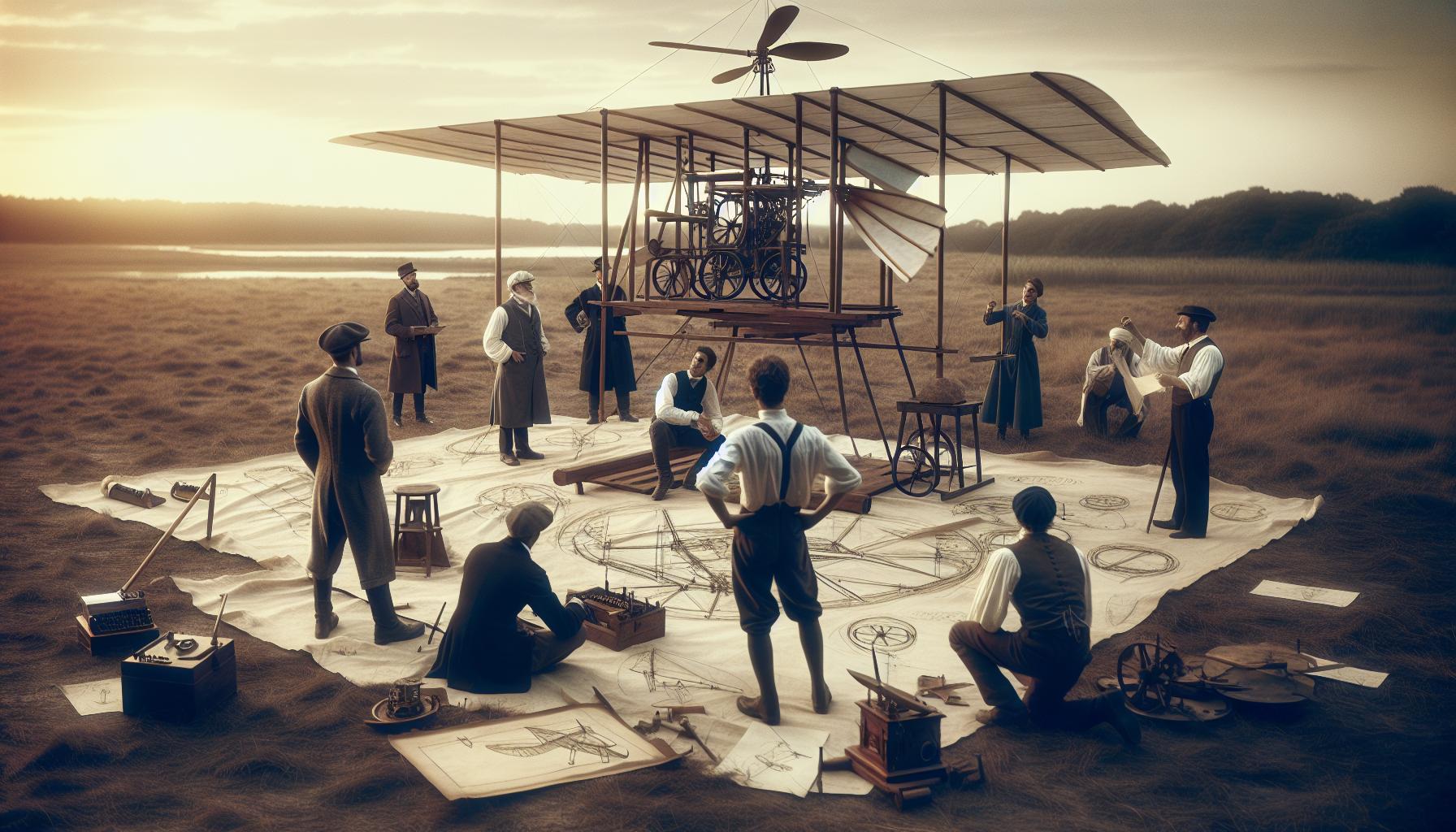
Long before the modern helicopter took to the skies, imaginative thinkers like Leonardo da Vinci envisioned the possibility of vertical flight. The excitement surrounding human flight dates back centuries, inspired by the beauty and grace of birds soaring through the air. In fact, ancient civilizations crafted myths and legends around flight, capturing the human spirit’s longing to rise above the ground. This dream fueled the Renaissance innovators, who were keen to bring such fantastical ideas to life through science and engineering.
During this remarkable period, many inventors and artists began exploring the mechanics of flight. They were inspired by nature and sought to understand the principles underlying avian movement. Notably, flying machines were not unique to da Vinci; theorists like Giovanni Battista Danti and Sir George Cayley also contributed to the conversation. These pioneers laid the groundwork for future innovations by creating theories and sketches that examined lift, navigation, and control.
Leonardo’s unique contribution was his detailed observations of bird anatomy and flight patterns. His sketches, particularly the infamous “helical air screw,” illustrated his profound understanding of lift, showcasing his attempt to create a machine that could ascend vertically. This blueprint, while never built in his lifetime, represented a significant step towards the eventual creation of the helicopter. It’s fascinating to consider how these early designs grappled with the core challenges of flight, such as overcoming gravity and managing stability-issues that modern engineers continue to address.
One captivating example of earlier flight attempts is the use of kites and gliders. These simple machines laid the foundation for understanding aerodynamics. As children, many of us have flown kites on windy days, seemingly engaging in a dance with nature-a small experience echoing the ambitions of our Renaissance forebears. Today, for those interested in aviation, recreating these early inventions as DIY projects can provide a tangible connection to the past. Building your own model kite or paper helicopter can spark a curiosity about the principles of flight and the rich history that led to the development of modern rotorcraft.
In essence, the dreams of flight before the invention of the helicopter encapsulate humanity’s relentless pursuit of knowledge. From legend to scientific inquiry, the journey towards vertical flight weaves a rich tapestry of creativity and invention-an ongoing dialogue that continues to inspire aspiring aviators and engineers today.
Visualizing Da Vinci’s Helicopter: Illustrations and Interpretations
Leonardo da Vinci’s visionary drawings, particularly his designs for flying machines, ignite the imagination and highlight the genius of Renaissance innovation. His most famous illustration related to vertical flight is the “helical air screw,” which resembles a modern helicopter in both concept and aspiration. This fascinating design, sometimes dubbed the precursor to the helicopter, features a spiral shape that would, in theory, harness the principles of lift through rotation. While da Vinci never constructed this machine, his detailed sketches demonstrate an intricate understanding of aerodynamics-centuries ahead of his time.
Illustrations and Their Significance
Da Vinci’s illustrations reveal more than just artistic skill; they encapsulate a deeper pursuit of knowledge about flight. His numerous sketches of birds and their anatomy served as foundational studies that informed the mechanics of his flying machine concepts. The “helical air screw,” adorned with notes in da Vinci’s characteristic backwards script, suggests how he envisioned the apparatus operating, including elements like wind resistance and lift. The importance of these illustrations lies not only in their artistic merit but also in their role as a springboard for future innovations. They represent a blend of art and science where observation and imagination created the dialogue needed for technological progress.
Modern Interpretations
Today, enthusiasts and engineers continue to reinterpret da Vinci’s designs, exploring their feasibility with contemporary technology. Model builders often recreate the “helical air screw,” not only as a tribute to his genius but as a fun DIY project that invites experimentation with principles of flight. These models encourage an understanding of concepts such as aerodynamics and lift, providing accessible learning opportunities for aspiring pilots and engineers. For those interested in aviation history, constructing a replica offers a hands-on experience that bridges the gap between past and present in aviation.
In interpreting da Vinci’s work, it is essential to maintain awareness of the limitations of the materials and knowledge available in his time. The helical air screw was not just a fantasy; it was an ambitious attempt to conceptualize a flying machine that many consider to be a visionary precursor to the helicopter, showing how da Vinci’s imaginative spirit laid the groundwork for later advancements in vertical flight.
Myth vs. Reality: Debunking Da Vinci’s Inventions
Leonardo da Vinci’s legacy is steeped in captivating tales of invention, often blurring the lines between myth and reality. While many enthusiasts label his designs as visionary prototypes of modern technology, such as the helicopter, it’s essential to recognize that da Vinci never actualized these creations in his lifetime. The famed “helical air screw,” which bears a resemblance to contemporary helicopters, was indeed a bold concept. However, it remained a theoretical exploration without practical application, grounded in the constraints of 15th-century technology and materials.
Da Vinci’s sketches illustrate a profound understanding of aerodynamics, coupled with an imaginative spirit that saw potential in vertical flight. Despite this, his designs never progressed beyond the drawing board. For instance, the “helical air screw” was intended to be a massive apparatus powered by human effort-a logistics challenge that would have made its realization impractical. It is crucial to appreciate that while da Vinci possessed groundbreaking ideas, his inventions were merely concepts lacking the technological foundation to take flight.
The distinction between myth and reality in da Vinci’s inventions lays the groundwork for understanding how his works influenced future aviation pioneers. His notes detail principles of lift and mechanics, which later innovators would revisit and refine. Today’s engineers often reflect on da Vinci’s visionary spirit when developing aerial technology. From hobbyists building replicas to students exploring aerodynamics through his sketches, da Vinci’s influence persists in dynamic ways.
Ultimately, while the notion that Leonardo da Vinci invented the helicopter is more myth than fact, it highlights a fundamental truth: his visionary ideas continue to inspire generations. Recognizing the limitations within which he operated allows for a greater appreciation of his genius, illustrating how one man’s dreams paved the way for the complex realities of modern aviation we enjoy today. This exploration invites us all-aviation enthusiasts and casual hobbyists alike-to marvel at the intersection of creativity and science, serving as a reminder of the endless possibilities inherent in innovation.
The Legacy of Da Vinci in Aviation History
Leonardo da Vinci’s innovative spirit was far ahead of his time, and his explorations in design laid important groundwork for future aviation. Although he never built the flying machines he envisioned-most famously his “helical air screw,” often likened to a helicopter-his concepts ignited imaginations and inspired generations of engineers and inventors. His sketches, filled with intricate details and insight into the principles of flight, were reflections of a genius who understood physics before the science was fully established.
One cannot overstate how da Vinci’s curiosity and analytical approach resonate in today’s aeronautics. His ideas about aerodynamics, lift, and control mechanisms have been revisited and refined throughout history, ultimately evolving into the sophisticated machines we see in the sky today. For instance, when modern engineers design helicopters, they tap into the foundational concepts that da Vinci proposed. His recognition of the need for rotor-like structures to create lift paved the way for advancements in vertical flight technologies. His legacy is palpable in the blueprints and specifications that continue to influence contemporary aviation designs.
Furthering his impact, Leonardo’s works serve as a source of inspiration not just for professionals in the aerospace industry but also for students and hobbyists. Educational programs often reference his designs, utilizing them as projects in aerodynamics lessons. For DIY enthusiasts, recreating da Vinci’s models can be a rewarding way to engage with engineering principles. In crafting replicas of his inventions, individuals not only honor his genius but also gain hands-on experience with the fundamental concepts that govern flight.
In summary, while da Vinci may not have invented the helicopter as we know it, his contributions undoubtedly paved the way for its eventual realization. The admiration for his visionary ideas reflects a broader narrative in aviation history-one that celebrates the relentless pursuit of innovation. His life and work remind us that great leaps in technology often begin with audacious dreams, inspiring both the aviation community and the public to carry forward a legacy rich with creativity and possibility.
Frequently Asked Questions
Q: Did Leonardo da Vinci invent the first helicopter?
A: Leonardo da Vinci did not invent a working helicopter, but he conceptualized a design known as the “aerial screw.” This design, sketched in the late 15th century, represented an early understanding of vertical flight, but it never progressed to a functional prototype. For more on his innovations, see “Exploring Da Vinci’s Renaissance Innovations.”
Q: How did da Vinci’s designs influence modern aviation?
A: Da Vinci’s visions of flight, particularly his aerial screw design, inspired future generations of engineers and aviation pioneers. His detailed sketches and understanding of aerodynamics laid foundational concepts that contributed to developing modern helicopters. Explore this in “How Da Vinci’s Designs Inspired Modern Aviation.”
Q: What is the ‘aerial screw’ and how is it related to helicopters?
A: The aerial screw is a design by Leonardo da Vinci resembling a modern helicopter. It featured a helical structure intended to lift off the ground. While it was never built, it demonstrates da Vinci’s insights into flight dynamics. For a deeper dive, check out “Understanding the Mechanics Behind Da Vinci’s Helical Concepts.”
Q: Why is da Vinci considered a pioneer of aviation?
A: Da Vinci is considered a pioneer of aviation due to his innovative sketches and concepts about flight, including the aerial screw and ornithopter designs. His work showcased a blend of art and science that significantly influenced later aviation technologies. Learn more in “The Legacy of Da Vinci in Aviation History.”
Q: What challenges did da Vinci face in his flight designs?
A: Da Vinci faced numerous challenges in his flight designs, including limited materials, lack of technology, and an incomplete understanding of aerodynamics. His designs remained theoretical and were constrained by the scientific limitations of his time. More details can be found in “Myth vs. Reality: Debunking Da Vinci’s Inventions.”
Q: When was the concept of vertical flight first introduced?
A: The concept of vertical flight was first introduced by Leonardo da Vinci in the late 15th century through his sketches of the aerial screw. This was one of the earliest documented ideas of powered vertical flight, paving the way for future innovations. See “The Concept of Vertical Flight in the Renaissance” for more insights.
Q: Did any of da Vinci’s inventions ever become reality?
A: While none of Leonardo’s flying machines were built during his lifetime, his inventions, such as the helicopter concept and various mechanical gadgets, informed developments in engineering and aviation centuries later. Visit “Comparative Analysis: Da Vinci and Modern Helicopter Designers” for a more detailed review.
Q: How have interpretations of da Vinci’s helicopter changed over time?
A: Interpretations of da Vinci’s helicopter have evolved through historical analysis and technological advancements, with modern recreations attempting to bring his aerial screw to life. Each interpretation seeks to align with contemporary understanding of aerodynamics. For visual insights, check “Visualizing Da Vinci’s Helicopter: Illustrations and Interpretations.”
Closing Remarks
As we explore the fascinating question of whether Leonardo da Vinci invented the helicopter, it’s clear that his visionary designs laid the groundwork for aviation. While not a true helicopter, his concepts showcased the ingenuity that propelled human flight forward. If you’re intrigued by the intersections of art, science, and technology in aviation, check out our articles on the evolution of helicopters and the engineering behind modern flight.
Don’t miss out-subscribe to our newsletter for the latest insights on aviation history and innovation! Engage with us by sharing your thoughts in the comments below or exploring our related projects and DIY guides. Your journey into the world of flight is just beginning, and we’re here to guide you every step of the way! Remember, the wonders of aviation are only a click away, so dive deeper into our resources to fuel your curiosity and passion.
Get our latest guides, news, and insights highlighted in your Google Search & AI Overviews.