In 1939, the first practical helicopter flight marked a pivotal moment in aviation history, transforming how we perceive air travel and emergency response. Imagine a machine capable of vertical takeoff and landing, navigating through narrow city streets or reaching remote locations in mere minutes. This innovation bridged the gap between ground and sky, fascinating enthusiasts and changing logistics forever. As we delve into the journey of helicopter development, you’ll discover the challenges faced by early inventors and the remarkable engineering that led to safe, reliable flight. Join us as we explore the origins of this incredible vehicle, its impact on modern life, and the exciting future of helicopter technology, sparking curiosity for aspiring pilots and aviation fans alike.
The Early History of Helicopter Development
The story of helicopter development is a fascinating journey of innovation and perseverance. The dream of vertical flight has captivated inventors for centuries, but it wasn’t until the early 20th century that the practical helicopter began to take shape. In 1936, the Focke-Wulf Fw 61 made history as the first successful, controllable helicopter, showcasing the potential of rotorcraft. This milestone was a critical stepping stone, paving the way for further advancements in helicopter technology and design.
A significant breakthrough occurred in 1942 when the Sikorsky R-4 became the first helicopter to reach full-scale production. The R-4 demonstrated the versatility of helicopters, offering viable applications in military operations and search and rescue missions. Its success fueled further interest and investment in helicopter technology, leading to a rapid expansion in the capabilities and roles of helicopters throughout the ensuing decades.
As helicopter design evolved, engineers faced numerous technological challenges. Creating a stable platform for flight required mastering aerodynamics and rotor mechanics. Inventors experimented with various rotor configurations and power sources, gradually refining designs to improve lift, stability, and speed. Early pioneers endured crashes and setbacks, learning from each failure to enhance future models. This iterative process was essential in moving from initial concepts to the operational helicopters we rely on today.
The pivotal developments of the late 1930s and early 1940s set the stage for helicopters to play a crucial role in modern aviation. Today’s rotorcraft are indispensable tools in various fields, from emergency medical services to law enforcement, agriculture, and beyond. The legacy of those early inventors lives on in the advanced helicopters soaring through the skies, demonstrating the enduring spirit of innovation and human ingenuity in the quest for flight.
Key Inventors Behind the First Helicopters
Innovators in the early helicopter development played crucial roles in transforming the concept of vertical flight into a reality. One of the most notable figures was Heinrich Focke. In 1936, he developed the Focke-Wulf Fw 61, recognized as the first successful, controllable helicopter. It featured a twin-rotor design that proved crucial for stability and control during flight. This design not only demonstrated the potential for helicopters but also laid the groundwork for future advancements in rotorcraft technology.
Another pivotal inventor was Igor Sikorsky, who had a significant influence on helicopter design after the Fw 61. Sikorsky invented the first mass-produced helicopter, the Sikorsky R-4, which took to the skies in 1942. This helicopter showcased innovative features such as the tail rotor for directional control, which became a standard in helicopter design. Sikorsky’s commitment to making helicopters practical for military applications greatly advanced the industry, emphasizing the need for effective vertical lift solutions in wartime scenarios.
In addition to Focke and Sikorsky, other inventors contributed to the evolution of helicopter technology. Inventors like Juan de la Cierva and Arthur Young explored various rotor designs and mechanics, enhancing flight stability and control. Their research and experimentation helped address previous technological challenges that early helicopter prototypes faced, such as oscillation and lift imbalance.
- Heinrich Focke: Developed the Fw 61, the first successful helicopter.
- Igor Sikorsky: Created the R-4, the first mass-produced helicopter.
- Juan de la Cierva: Innovated in rotor systems contributing to helicopter stability.
- Arthur Young: Advanced rotorcraft design principles.
These pioneers exemplified the spirit of innovation during the early helicopter age, overcoming numerous obstacles to make vertical flight practical. Their collective efforts not only changed aviation history but also inspired future generations of engineers and pilots. As we honor their contributions, we can also appreciate the profound impact that helicopters have had on modern society-from emergency services to military operations, their development has continuously evolved, shaping the aviation landscape we know today.
The Technological Challenges of Helicopter Flight
The quest to achieve controlled vertical flight was fraught with numerous technological challenges that early helicopter innovators had to confront. One of the major hurdles was the problem of lift and stability. Early designs, including those from pioneers like Igor Sikorsky and Heinrich Focke, often struggled with creating enough lift while maintaining control. The rotor blades had to be engineered to generate sufficient upward force while preventing loss of control, a problem exacerbated by the phenomenon known as “dissymmetry of lift,” where the rotor blades experienced differing lift on each side depending on their rotation.
Another significant challenge was the issue of vortex ring state, a condition where a helicopter descends into its own downwash, causing a sudden loss of lift. This could lead to dangerous situations if not effectively managed. Engineers experimented with various rotor configurations and designs to mitigate these risks. For instance, the introduction of tail rotors was a groundbreaking advancement that allowed pilots to counteract the torque produced by the main rotor, thus enhancing directional control and preventing unwanted yaw.
The complexities of mechanical reliability were also paramount, especially given the rudimentary materials and technology available in the early 20th century. Helicopter components needed to withstand significant stress while remaining lightweight. The materials used, such as wood and early alloys, posed limitations that could jeopardize safety. Consequently, developers focused on creating robust yet lightweight designs, which involved rigorous testing and research.
As innovations progressed, so did the sophistication of avionics and pilot controls. Earlier helicopters featured rudimentary control systems, leaving pilots with little feedback during flight. The evolution of control technology improved pilot-interface and provided more stable flight operations. This enhancement, paired with more reliable engine performance, ultimately laid the groundwork for the helicopters we recognize today.
By addressing these technological challenges, early pioneers not only advanced helicopter design but also set the stage for the multifaceted applications of helicopters in various fields, from medical transport to military operations and beyond. The relentless pursuit of innovation in overcoming these obstacles demonstrates the resilience and ingenuity that define the evolution of rotorcraft technology.
1939: A Milestone Year in Aviation History
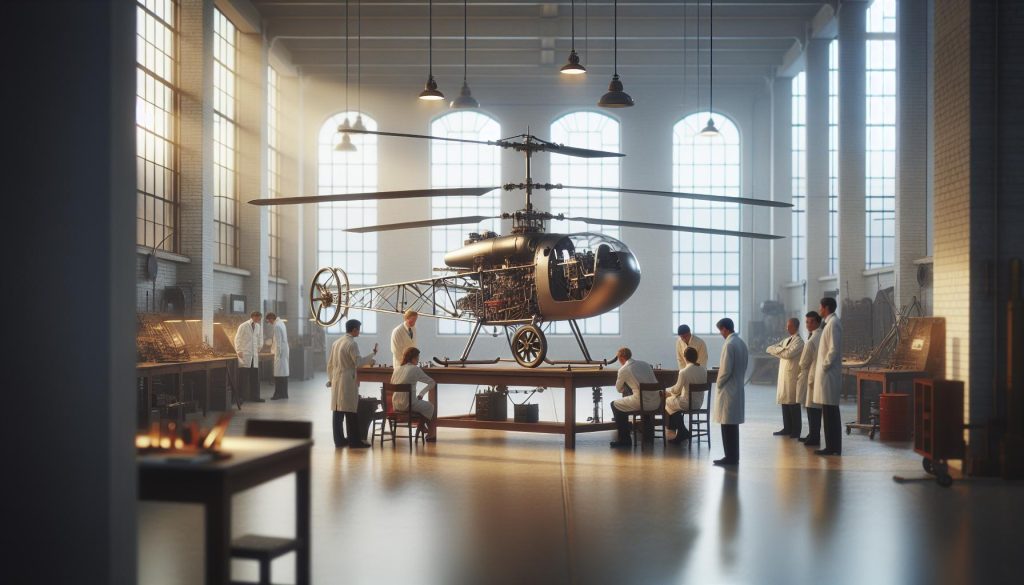
In 1939, the world of aviation witnessed a groundbreaking achievement that would forever change the landscape of vertical flight. That year, Igor Sikorsky successfully conducted the first practical flight of a helicopter, the Vought-Sikorsky VS-300. This innovation marked a pivotal moment in aviation history, as it demonstrated the potential of helicopters to achieve controlled flight, a feat that had stumped engineers and inventors for decades.
The VS-300 featured a revolutionary design that utilized a single main rotor and a smaller tail rotor, effectively addressing the torque issues that had limited earlier designs. This configuration not only provided stability during flight but also gave pilots greater control, allowing them to maneuver with unprecedented ease. Sikorsky’s efforts culminated in a flight that lasted for over a minute, soaring to an altitude of 12 feet, which was a significant milestone considering the challenges that had come before. The successful demonstration of the VS-300 validated the feasibility of helicopter technology and set the stage for the development of more advanced rotorcraft.
As excitement grew around this new form of flight, the implications for various industries became clear. Helicopters could perform tasks that fixed-wing aircraft could not, such as landing in confined spaces, search and rescue operations, and medical evacuations. This versatility spurred further investment and research into helicopter technology, paving the way for future innovations that would enhance safety, efficiency, and performance.
The success of 1939 did not go unnoticed by military and civilian sectors alike. The versatility offered by helicopters contributed to their rapid adoption, especially during World War II, where they played crucial roles in logistical support and troop transport. Saxon helicopters became an integral part of modern aviation, influencing everything from emergency services to news broadcasting. The advancements in helicopter technology initiated by Sikorsky in that landmark year have continued to reverberate through the aviation industry, showcasing the endless possibilities that rotorcraft can achieve.
How the First Practical Helicopters Operated
The achievement of controlled flight by the Vought-Sikorsky VS-300 in 1939 marked the dawn of practical helicopter operation. This pioneering helicopter operated on fundamental aerodynamic principles, utilizing rotating blades to generate lift and thrust. By employing a single main rotor paired with a smaller tail rotor, Sikorsky effectively mitigated the torque produced by the main rotor’s rotation, which had been a significant hurdle for earlier designs. This innovative configuration not only enabled the aircraft to control its altitude and orientation during flight but also provided pilots with newfound maneuverability, allowing for lateral and vertical movements with ease.
The VS-300’s rotor system operated through a process known as autorotation, which occurs when the blades of a helicopter are rotated by the upward rush of air as the helicopter descends. This feature is crucial for safety, as it allows the pilot to maintain control in the event of an engine failure. When descending, the pilot can manipulate the pitch of the blades, directing air through the rotor system to maintain lift, thus ensuring a controlled descent and landing. Pilot experience and skill play significant roles in executing these maneuvers, demonstrating the importance of comprehensive flight training and understanding of helicopter mechanics.
Maintenance of a helicopter is equally vital. Early rotorcraft, like the VS-300, emphasized the need for ongoing technical support to ensure reliability and safety in operations. Regular checks of critical components-including the rotor blades, transmission systems, and tail rotor-are essential to prevent mechanical failure during flight. This practice highlights the necessity for training not just for pilots but also for ground crews who must fully understand these systems to uphold safety standards.
In recognizing the VS-300’s groundbreaking operations, it’s important to honor the context in which these early helicopters emerged. The engineering challenges that plagued initial designs were met with innovative solutions, but these advancements also came with risks. As helicopter technology continued to develop, learning from early crashes and mechanical failures would shape future designs, influencing how helicopters operate today. Each flight made by the VS-300 was not just a test of technology; it was a testament to human ingenuity and the spirit of exploration, paving the way for the versatile helicopter applications we see across numerous industries today.
The Role of World War II in Helicopter Advancements
The Second World War marked a watershed moment for helicopter development, propelling innovations that would change aviation forever. As military needs intensified, the limitations of fixed-wing aircraft became evident, particularly in transport and rescue operations. Helicopters, with their ability to take off and land vertically, emerged as the perfect solution for accessing difficult terrains and delivering supplies in conflict zones.
During the war, the U.S. Army developed several key models, notably the Sikorsky R-4, which became the first mass-produced helicopter. Its design incorporated many of the principles established by Igor Sikorsky’s earlier work with the VS-300. The R-4 proved invaluable in medical evacuations, transporting the wounded away from battlefields quickly and efficiently, as well as providing reconnaissance. The success of such missions demonstrated the helicopter’s unparalleled versatility and helped to solidify its role within military operations.
Moreover, the war catalyzed advancements in helicopter technology. Engineers made significant progress in materials and rotor designs, resulting in lighter and more robust aircraft. The need for improved performance in difficult combat conditions led to innovations in rotor blade design, importantly enhancing lift and control. These developments not only improved operational efficiency but also laid the groundwork for future civilian helicopters, broadening their potential uses in agriculture, law enforcement, and emergency services.
As the conflict drew to a close, the role helicopters played during the war shifted perceptions and opened new avenues in both military and civilian spheres. The increased recognition of their capabilities led to expanded funding and research into rotary-wing aircraft post-war. This momentum fostered advancements that would shape the helicopter industry for decades to come, underscoring the profound impact of World War II on aviation history and the development of this remarkable flying machine.
Impact of Helicopters on Modern Aviation
The advent of helicopters has revolutionized aviation, transforming the way we approach transportation, search and rescue, and even warfare. With their unique ability to take off and land vertically, helicopters have bridged the gap between ground and air travel, making previously inaccessible locations reachable. The practical flight of the first helicopters in 1939 marked the beginning of an era where rapid response capabilities became fundamental in emergency situations-a relevance that persists today.
One of the most significant contributions of helicopters to modern aviation is their versatility in various sectors. In medical emergencies, helicopters facilitate life-saving procedures by quickly transporting patients to hospitals, especially in hard-to-reach areas. The expanded use of air ambulances has substantially increased survival rates in critical conditions. In law enforcement, helicopters provide aerial surveillance, enhancing public safety by monitoring traffic, tracking suspects, and supporting search operations.
Beyond emergency services, helicopters play a crucial role in industries such as tourism and agriculture. In tourism, scenic helicopter tours have become popular, offering breathtaking views of landscapes that ground transport cannot provide. Meanwhile, in agriculture, helicopters are utilized for crop spraying, showcasing their efficiency in agricultural management. The ability to hover and maneuver in tight spaces makes them ideal for tasks that would be cumbersome or impossible for fixed-wing aircraft.
As we look to the future, the helicopter industry is poised for further advancements. Innovations in technology, such as electric and hybrid models, promise to enhance sustainability and reduce operational costs. Additionally, autonomous flight technology is being explored, which could lead to pilotless helicopters in the not-so-distant future, potentially transforming air travel and cargo transport again.
In summary, helicopters have had a profound impact on modern aviation, not only by enhancing existing services but also by creating new opportunities across various fields. Their unique capabilities continue to inspire innovations, demonstrating that the helicopter industry is not only a reflection of our past but a vital part of our future.
Key Helicopter Models That Changed the Industry
The history of helicopters is marked by several pioneering models that not only demonstrated the feasibility of vertical flight but also transformed the aviation landscape. One standout in this evolution is the Focke-Wulf Fw 61, which is often credited as the first practical helicopter. Developed in Germany in the early 1930s, it made its first flight in 1936. With two large counter-rotating rotors and a robust design, it set the stage for future developments in rotorcraft, proving that helicopters could operate effectively in various conditions.
Another landmark model is the Sikorsky R-4, which became the first helicopter to be mass-produced and used by the military during World War II. Its first flight occurred in 1942, and it quickly became vital for transporting troops and supplies, as well as conducting rescue missions. The R-4’s success led to numerous advancements in helicopter design and technology, paving the way for the versatile aircraft we rely on today.
The Bell 47, introduced after the war, further revolutionized the industry. Known for its distinctive bubble canopy and simple, yet effective design, it gained popularity for use in civil aviation, medical evacuation, and even agricultural applications. The Bell 47 earned a permanent place in pop culture when it was featured in the TV show “MAS*H,” helping to solidify the helicopter’s image as a symbol of rapid response and innovation.
Finally, the Boeing CH-47 Chinook has played a critical role in military logistics since its introduction in the 1960s. Its twin-rotor system allows for heavy lifting and versatility in cargo transport, making it invaluable in combat and humanitarian missions. The Chinook continues to be a workhorse for military operations, proving that the development of helicopter technology plays an ongoing and vital role in modern aviation.
These key models reflect a significant evolution in helicopter design and functionality, shaping the industry as we know it today. As technology continues to advance, we can anticipate further innovations that will continue to redefine what helicopters can achieve in both civilian and military applications.
Learning from Early Helicopter Crashes
Experiments in vertical flight often come with a learning curve, and the early days of helicopter development were no exception. Each crash taught engineers and pilots invaluable lessons, shaping the future of helicopter safety and design. For instance, when we look at the Focke-Wulf Fw 61, credited as the first practical helicopter, its pioneering flights in the 1930s were a showcase of innovation, yet not without mishaps. Early helicopters were experimental; their stability and control were untested in practical applications, which led to numerous accidents.
The Sikorsky R-4, the first mass-produced helicopter, also faced challenges. Initial flights reported issues such as rotor vibration and tail rotor failures, which could lead to catastrophic loss of control. Investigating these incidents allowed engineers to refine rotor designs and improve aerodynamics. Safety protocols developed from these experiences laid the groundwork for modern aviation standards. Understanding factors like weight distribution, engine power, and pilot input became critical as every crash offered lessons about the dynamics of flight.
The aftermath of these early crashes also influenced training programs for pilots. Recognizing that knowledge is key to safety, the aviation industry strengthened education on helicopter operations. Aspiring pilots today benefit from the in-depth analysis of past accidents, which emphasizes the importance of pre-flight checks and understanding the unique control characteristics of helicopters, such as the need for constant adjustments during flight.
The stories of these incidents serve not just as cautionary tales but also as testimonies to human resilience and technological progress. By examining early helicopter crashes, aviation enthusiasts and professionals learn that behind every great leap in technology lies a series of challenges that demanded innovation and tenacity. Today’s helicopter designs are far more sophisticated, but remembering the roots of these lessons keeps the spirit of safety and improvement alive in the industry.
Career Opportunities in the Helicopter Industry
With the invention of practical helicopters in 1939 and the subsequent advancements in technology, the helicopter industry has blossomed into a vibrant field with numerous career opportunities. Today, individuals can explore a variety of roles ranging from piloting to engineering, maintenance, and beyond. The demand for skilled professionals continues to rise due to the versatility and essential functions helicopters serve in various sectors, including emergency services, law enforcement, tourism, and military operations.
Career Paths in the Helicopter Industry
For those passionate about flying, becoming a helicopter pilot is a primary career path. Helicopter pilots can work in different capacities, including medical evacuations, aerial firefighting, and offshore transport. To pursue this career, aspiring pilots typically need to obtain a commercial pilot’s license with a rotorcraft rating, which involves rigorous training and a commitment to safety. The process requires critical skills, such as quick decision-making and excellent spatial awareness, honed through both theoretical education and practical flight experience.
For individuals interested in the technical aspects, careers in engineering and maintenance are crucial to ensuring the safety and efficiency of helicopter operations. Aerospace engineers design and test new rotorcraft technologies, while aviation maintenance technicians are responsible for regular inspections and repairs. These roles often require specialized training and certifications, focusing on areas like avionics, systems engineering, and structural maintenance. This path suits individuals with a knack for problem-solving and a deep appreciation for mechanical systems.
Factors Influencing Career Success
Several factors can influence success in helicopter-related careers:
- Experience: Real-world experience and flight hours are critical for pilots and technicians. Internships and co-op programs can provide invaluable hands-on learning.
- Certifications: Staying current with certifications and training ensures professionals remain competitive and knowledgeable about evolving technologies and safety standards.
- Networking: Building relationships in the aviation community can open doors to opportunities and provide support during career transitions.
- Continuous Learning: The aviation industry is ever-evolving; a commitment to lifelong learning is essential for keeping skills sharp and staying up-to-date with industry advancements.
In addition to technical roles, opportunities exist in management, sales, and education within the helicopter sector. Helicopter flight schools and training organizations seek experienced pilots to instruct new pilots, while manufacturers often need skilled sales personnel who can communicate the capabilities of their aircraft.
As the helicopter industry continues to evolve, so do the career prospects available to those eager to join this dynamic field. With dedication and a passion for flight, individuals can contribute to advancements that honor the legacy of early pioneers while ensuring safety and innovation in vertical flight.
The Future of Helicopter Technology and Innovations
The journey of helicopter technology is a testament to human ingenuity, evolving from the early machines of the 1940s to sophisticated rotorcraft driven by advanced technologies today. As we look ahead, several key innovations are shaping the future of aviation. One of the most exciting developments is the shift towards electric and hybrid-electric rotorcraft. These aircraft promise to offer quieter operations, reduced emissions, and lower operating costs, aligning with global sustainability goals. Companies are actively experimenting with electric propulsion systems, as seen in projects like the Airbus eVTOL, which could revolutionize urban air mobility.
Advancements in materials science also hold immense potential for future helicopters. The use of lightweight composites and advanced alloys can significantly enhance performance and fuel efficiency. By reducing the overall weight of helicopters, manufacturers can improve lift capabilities and expand operational ranges, enhancing mission flexibility from emergency medical services to search and rescue operations.
Furthermore, automation and artificial intelligence are paving the way for greater safety and efficiency in helicopter operations. With the development of autonomous flight systems, pilots may soon benefit from advanced decision-making tools that enhance situational awareness and reduce human error. This shift can transform the industry, especially in high-risk environments like military operations and disaster response.
In addition to these technological strides, the integration of helicopters into the broader aerial mobility ecosystem is gaining traction. As urban environments expand, the demand for quick and efficient transportation solutions grows. Future helicopters might serve as air taxis, offering quick passage across congested cities, supported by well-coordinated air traffic management systems.
As innovation drives the helicopter industry forward, the potential for new career paths is vast. From designing advanced propulsion systems to working on autonomous flight technologies, the opportunities for aspiring aerospace engineers and pilots are expanding. Understanding these trends and developments is crucial for anyone looking to enter this dynamic field and contribute to the next chapter in helicopter history.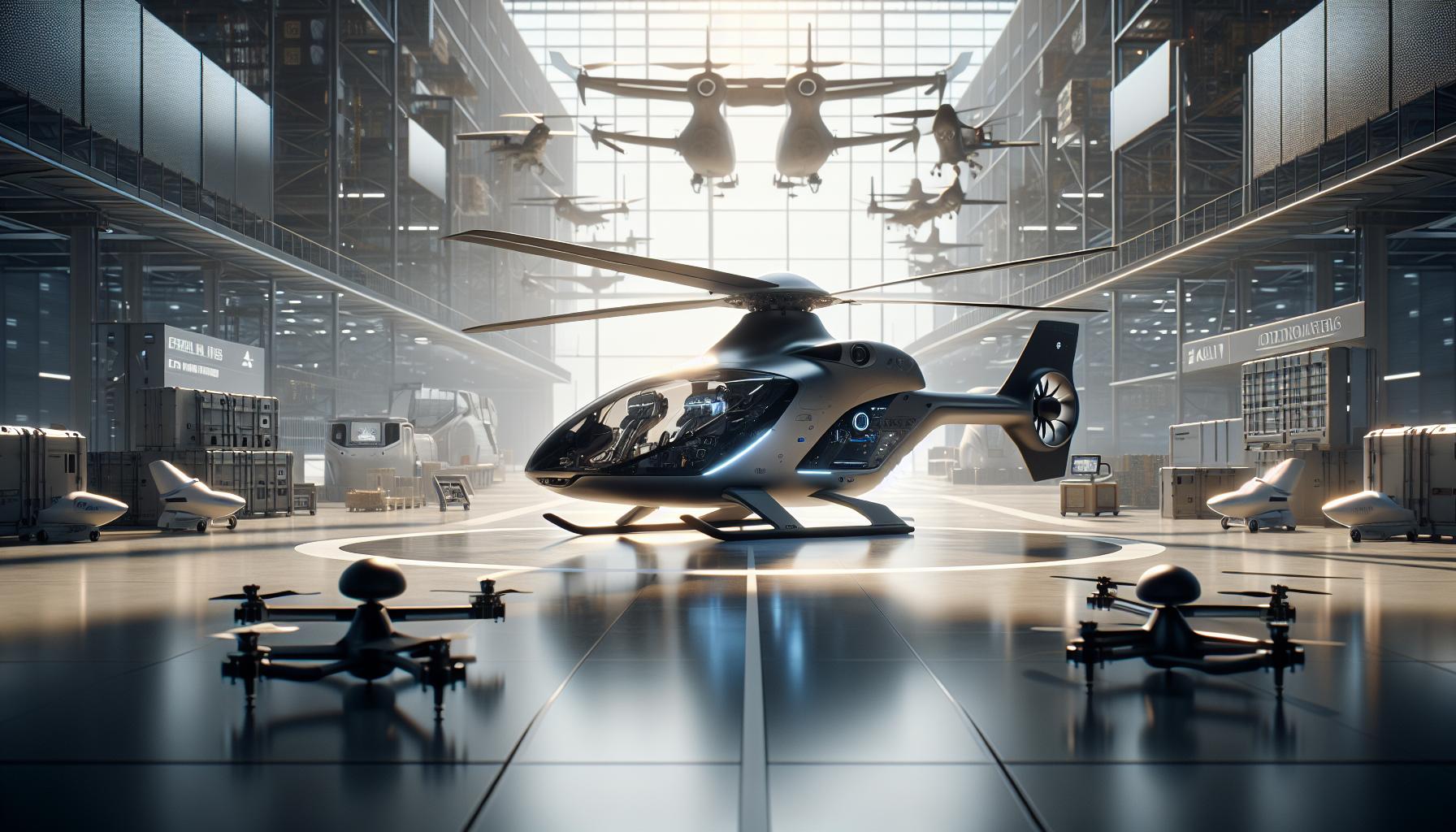
Helicopters in Pop Culture: Movies and Media
From thrilling chase scenes to dramatic rescues, helicopters have captivated audiences in movies and media since the dawn of their practical use. The first successful flight of a practical helicopter in 1939 marked a turning point not just in aviation history, but also in how these machines were represented in popular culture. Films like “MAS*H,” “Apocalypse Now,” and “Black Hawk Down” feature helicopters not merely as tools of transport but as symbols of adventure, military power, and human resilience.
Helicopters often represent a sense of freedom and capability. In many action films, they serve as the vehicle of choice for heroes navigating urban landscapes or remote terrains. They can convey rapid response to emergencies in rescue films, showcasing the bravery and skill of pilots and crew during critical operations. For instance, the iconic scene in “Mission: Impossible – Fallout,” where Tom Cruise leaps from a helicopter, combines the thrill of action with the technical prowess of rotary-wing aviation, leaving audiences on the edge of their seats.
Interestingly, helicopters also hold a significant role in documentaries and news media, where they provide vital aerial perspectives of disasters, conflicts, and natural beauty. Helicopters enable journalists to cover breaking news from above, capturing footage that would otherwise be impossible. This duality illustrates the helicopter’s capacity to be both a hero and a tool for storytelling, allowing the world to witness events unfold in real-time.
The allure of helicopters in pop culture has also inspired scores of enthusiasts and potential pilots. With movies showcasing the excitement of flight, many individuals are motivated to pursue careers in aviation, whether as pilots, technicians, or even in media production roles that require an understanding of aerial cinema. The combination of adventure and technical skill represented in these films makes the helicopter not just a means to an end, but a key element in the narrative of human capability and innovation.
With their representation in popular media, helicopters have transcended their original purpose, becoming icons of action and adventure. As these machines continue to evolve, both in technology and in their portrayal in entertainment, they inspire generations to dream of flight and the incredible possibilities it brings.
Q&A
Q: When was the first successful helicopter flight?
A: The first successful helicopter flight occurred in 1939. This milestone is credited to the Focke-Wulf Fw 61, which pioneered practical helicopter technology and demonstrated vertical takeoff and landing capabilities, marking a significant leap in aviation history.
Q: Who invented the first practical helicopter?
A: The first practical helicopter was invented by Henri Coandă and subsequently developed by other aviation pioneers, including Igor Sikorsky. Sikorsky’s designs in the late 1930s laid the foundation for effective rotorcraft that could operate reliably.
Q: What were the key features of the first helicopters?
A: The first helicopters, like the Fw 61, featured two-bladed rotor systems that allowed for vertical flight. Innovations included a tail rotor for stability during flight and the ability to hover, take off, and land vertically without the need for runways.
Q: How did World War II impact helicopter development?
A: World War II accelerated helicopter development significantly. The war created a demand for versatile aircraft capable of rescuing troops and transporting supplies, leading to increased funding and technological advancements that improved helicopter designs and performance.
Q: What challenges did early helicopters face?
A: Early helicopters grappled with challenges like stability and control, limited power-to-weight ratios, and technical difficulties in rotor design. These obstacles were addressed through continuous innovation and rigorous testing in the early years of helicopter aviation.
Q: What is the significance of the year 1939 in aviation history?
A: The year 1939 is significant because it marked the first practical flight of a helicopter, symbolizing a breakthrough in aviation technology. This event laid the groundwork for future developments in rotorcraft and influenced modern helicopter design.
Q: How have helicopters evolved since 1939?
A: Since 1939, helicopters have evolved through significant technological advancements in aerodynamics, materials, and avionics. Modern helicopters are more powerful, efficient, and equipped with advanced navigation systems, enhancing their operational capabilities in diverse environments.
Q: What are some notable helicopter models introduced after 1939?
A: Notable helicopter models introduced after 1939 include the Bell UH-1 Iroquois, commonly known as the “Huey,” and the Sikorsky CH-53 Sea Stallion. These models contributed to the versatility and effectiveness of helicopters in both military and civilian applications.
Wrapping Up
The invention of the helicopter in 1939 marked a pivotal moment in aviation history, setting the stage for extraordinary advancements in rotorcraft technology. Now that you know how this incredible machine took flight, explore our detailed articles on the evolution of helicopters, including the first successful models and key milestones in rotorcraft development. Dive deeper into the fascinating world of flight by checking out our sections on helicopter careers and safety innovations.
Don’t forget to subscribe to our newsletter for the latest updates and exclusive insights into the aviation industry! Whether you’re an aspiring pilot or simply a helicopter enthusiast, there’s always more to learn. Share your thoughts in the comments below or follow us on social media to join our community of aviation fans. Your next adventure in understanding the skies is just a click away!
Get our latest guides, news, and insights highlighted in your Google Search & AI Overviews.