✨ This article was AI edited. Editorial responsibility: HelicopterToursofSantaBarbara.com.
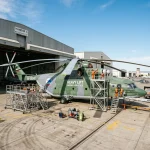
What is the longest helicopter in the world? The longest production helicopter ever built is the Mil Mi-26 (NATO: Halo), which measures 40.025 meters (131 feet 4 inches) in total length with its massive 8-blade main rotor and tail rotor turning, with a fuselage length of 33.73 meters (110 feet 8 inches). In experimental aviation history, the twin transverse-rotor Mil V-12 (Homer) holds the ultimate rotorcraft size record, measuring 37.0 meters (121 feet 5 inches) in fuselage length with an immense rotor-tip wingspan of 67.0 meters (219 feet 10 inches).
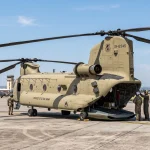
In Western military aviation, the tandem-rotor Boeing CH-47 Chinook measures 30.1 meters (98 feet 10 inches) overall with rotors spinning, while the heavy-lift Sikorsky CH-53K King Stallion spans 30.2 meters (99 feet 1 inch).
Defining Rotorcraft Length: Fuselage Length vs. Rotors Turning
When measuring the length of a helicopter, aeronautical engineers distinguish strictly between two standard metrics:
- Fuselage Length (Structural Length): The static physical distance from the nose cone to the extreme tip of the tail boom or empennage structure. This determines hangar footprint, cargo ramp clearance, and shipping dimensions.
- Overall Length (Rotors Turning Length): The maximum dynamic longitudinal dimension measured from the forward-most reach of the spinning main rotor blade tip to the aft-most reach of the tail rotor (or rear tandem rotor disk). This metric dictates helipad size requirements, obstacle clearance buffers, and flight deck operating safety envelopes.
The Top 7 Longest Helicopters in Aviation History
Rotorcraft exceeding 25 meters in length represent monumental feats of structural engineering, requiring specialized materials to damp low-frequency fuselage flexure and massive turboshaft powerplants to drive high-inertia rotor disks.
| Helicopter Model | Fuselage Length | Overall Length (Rotors Turning) | Rotor Configuration | Max Takeoff Weight (MTOW) |
|---|---|---|---|---|
| Mil Mi-26 “Halo” | 33.73 m (110 ft 8 in) | 40.025 m (131 ft 4 in) | Single 8-blade rotor (32 m diam) | 56,000 kg (123,450 lbs) |
| Mil V-12 “Homer” (Experimental) | 37.00 m (121 ft 5 in) | 37.00 m (Tip span: 67.0 m) | Transverse twin rotors (35 m diam ea) | 105,000 kg (231,500 lbs) |
| Mil Mi-6 “Hook” | 33.18 m (108 ft 10 in) | 41.74 m (136 ft 11 in)* | Single 5-blade rotor (35 m diam) | 42,500 kg (93,700 lbs) |
| Sikorsky CH-53K King Stallion | 22.28 m (73 ft 1 in) | 30.20 m (99 ft 1 in) | Single 7-blade rotor (24 m diam) | 39,916 kg (88,000 lbs) |
| Boeing CH-47F Chinook | 15.85 m (52 ft 0 in) | 30.10 m (98 ft 10 in) | Tandem twin 3-blade rotors (18.3 m ea) | 22,680 kg (50,000 lbs) |
| Boeing-Vertol CH-46 Sea Knight | 13.66 m (44 ft 10 in) | 25.70 m (84 ft 4 in) | Tandem twin 3-blade rotors (15.2 m ea) | 11,000 kg (24,300 lbs) |
| Sikorsky CH-54 Tarhe (Skycrane) | 21.41 m (70 ft 3 in) | 26.97 m (88 ft 6 in) | Single 6-blade rotor (21.9 m diam) | 21,320 kg (47,000 lbs) |
*Note: The Mi-6’s extreme rotor span of 35 meters gave it a massive total dynamic length, though the Mi-26 possesses a superior cargo hold volume, modern turbine power, and structural fuselage capacity.
Engineering Challenges of Extreme Helicopter Length
Building a rotorcraft that exceeds 30 meters introduces severe aerodynamic, structural, and control challenges that do not exist on standard utility airframes:
- Fuselage Flexibility and Structural Bending: Long fuselages behave like elastic beams in flight. Rotor head vibration frequencies can synchronize with the fuselage’s natural harmonic bending modes, leading to destructive resonance without advanced active vibration control systems.
- Tail Rotor Driveshaft Angularity and Torsion: On single-rotor giants like the Mi-26, transferring over 2,000 horsepower along a 100-foot driveshaft to the tail rotor requires segmented titanium shafts supported by multiple self-aligning bearing assemblies. Any structural flexure under high-g maneuvers must not bind the driveshaft.
- Tandem Rotor Blade Clearance: On tandem configurations like the CH-47 Chinook, the forward and aft rotor blades overlap significantly in the longitudinal axis. The rear pylon is elevated by nearly four feet, and the transmissions are mechanically synchronized by an internal drive shaft to guarantee the intermeshing blades never collide during violent pitch adjustments.
Operational Applications: Why Extreme Length Is Necessary
The operational necessity for extreme length stems directly from specialized military and humanitarian logistics:
- Outsized Tactical Cargo: The Mi-26 and CH-47 can ingest armored personnel carriers, tactical vehicles, and whole artillery pieces through rear hydraulic loading ramps without disassembling components.
- Disaster Relief & Heavy Infrastructure: Heavy-lift rotorcraft deliver pre-fabricated bridge spans, high-voltage transmission pylons, and humanitarian water bladders directly into remote disaster zones inaccessible to fixed-wing transport aircraft.
Explore our detailed guides on modern Helicopter Types, examine the combat history of Military Helicopters, or learn about aerodynamic principles in our Helicopter Flying Operations directory.
Get our latest guides, news, and insights highlighted in your Google Search & AI Overviews.