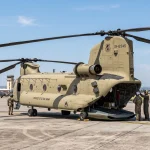
The CH-47 Chinook, famed for its twin-rotor design, is one of the most recognizable military helicopters in the world. With its unique layout allowing for enhanced stability and impressive lifting capabilities, it plays a crucial role in heavy-lift operations across various missions. Understanding the visual dynamics of the Chinook not only satisfies curiosity but also highlights its engineering marvels and contributions to aviation history. Whether you’re a casual admirer of aviation, an aspiring pilot, or simply exploring the world of helicopters, learning about the Chinook’s distinctive features will deepen your appreciation of this iconic aircraft. Join us as we take a closer look at what gives the Chinook its remarkable appearance and functionality, and discover the stories behind its impressive design.
What is a Chinook Helicopter? Overview and Purpose
The Boeing CH-47 Chinook helicopter stands out as a remarkable engineering achievement in aviation history, known for its distinctive twin-rotor design that provides exceptional lift and versatility. Developed in the 1960s and continuously updated, the Chinook is a workhorse in military operations and humanitarian missions, adept at transporting troops, supplies, and heavy equipment across challenging terrains. Its robust design ensures that it can operate effectively from the dense jungles of Vietnam to the rugged mountains of Afghanistan, showcasing its adaptability in various environments.
The helicopter’s twin-rotor configuration allows for greater stability and lifting capacity, enabling it to handle substantial payloads without compromising performance. This design not only enhances flight efficiency but also provides superior maneuverability compared to conventional helicopters with a single rotor. The Chinook’s ability to hover and perform rapid vertical climbs makes it invaluable in time-sensitive operations, whether it’s evacuating injured personnel or delivering critical supplies to remote locations.
For those curious about the mechanics behind the Chinook’s functionalities, the synchronization of the rotors negates the need for a tail rotor, a common feature in single-rotor helicopters. This not only reduces weight but also helps maintain a compact design that is vital for operations in tight spaces. As a result, the Chinook can perform tasks that require both power and agility, affirming its status as one of the most efficient and versatile helicopters in modern aviation.
Key Features of the Chinook’s Twin-Rotor Design
The Chinook helicopter’s twin-rotor design is one of its most striking and functional features, fundamentally influencing its operational capabilities. This innovative configuration involves two large rotors mounted on the top of the aircraft, which rotate in opposite directions. This not only enhances the aircraft’s lifting power but also significantly contributes to its stability and maneuverability, allowing it to excel in various challenging environments.
One of the core advantages of this twin-rotor design is the elimination of the need for a tail rotor, a common component in traditional single-rotor helicopters. The synchronization of the rotors generates the necessary torque to maintain balance and direction, reducing overall weight and complexity. As a result, the Chinook can carry massive payloads, from military supplies to disaster relief equipment, while remaining highly responsive during flight. The ability to hover and execute rapid ascents and descents makes the Chinook particularly valuable for urgent missions, such as troop insertions or medical evacuations.
Moreover, the twin rotors allow for exceptional aerodynamic efficiency. With a broader rotor span, the Chinook can produce more lift with less energy, translating to longer flight ranges and the ability to operate at higher altitudes. This efficiency is paramount in environments where altitude and weight limit operations, such as mountainous terrains. The design also contributes to the Chinook’s impressive top speeds, enabling quick responses in critical situations.
In addition to functionality, the aesthetics of the Chinook’s design have captured the imagination of aviation enthusiasts worldwide. Its imposing silhouette and robust build reflect not just a machine but a symbol of resilience and reliability. As such, it stands out not only in the military realm but also in popular culture, appearing in numerous films, documentaries, and military showcases, much to the admiration of helicopter fans everywhere.
Understanding the Chinook’s Unique Aerodynamics
The Chinook helicopter exemplifies a remarkable blend of engineering and aerodynamics, designed to tackle the challenges of heavy lifting and maneuverability. One captivating aspect of its aerodynamics lies in the way its twin-rotor system operates. Unlike traditional helicopters that utilize a single rotor with a tail rotor for counterbalance, the Chinook’s two rotors rotate in opposite directions. This unique configuration not only enhances lifting capabilities but also stabilizes the aircraft while in flight, allowing it to perform complex maneuvers safely and effectively.
How Twin Rotors Enhance Lift and Stability
The Chinook’s twin rotors generate lift through a larger rotor disc area, which is crucial for carrying hefty payloads-this can range from military supplies to humanitarian aid. The design’s effectiveness is evident during vertical takeoff and landing scenarios. Each rotor works in tandem to counteract the rotational forces that would otherwise induce yaw (a rotation around the vertical axis). As a result, pilots can maintain a steady course without needing additional stabilizing systems, which simplifies the flight dynamics and reduces weight.
In demanding environments, such as mountainous regions, the Chinook’s aerodynamic prowess shines. Its greater rotor efficiency means that it can perform operations at higher altitudes where the air density is lower. Here, the aircraft can hover with a heavy load thanks to its optimized rotor design, allowing for missions that would be impossible for less capable helicopters. The ability to maneuver effectively in these challenging conditions not only enhances mission success rates but also demonstrates the helicopter’s versatility across various operational contexts.
The Importance of Aerodynamics in Speed and Fuel Efficiency
The aerodynamic design of the Chinook does not stop at rotor efficiency. Its fuselage is sculpted to reduce drag, allowing for impressive speeds that can reach up to 170 knots. Such speed is crucial for rapid response missions, enabling the Chinook to deliver troops and supplies swiftly to critical areas. Additionally, the twin-rotor configuration plays a role in fuel efficiency. With superior lift capabilities, the helicopter can operate effectively in the air longer without excessive fuel consumption, making it an economical choice for extensive operational deployments.
In sum, understanding the unique aerodynamics of the Chinook helicopter illustrates why this aircraft stands out in the aviation world. Its twin-rotor design not only enhances lifting power and stability but also significantly improves operational capabilities in challenging environments, ensuring that it remains an essential asset for military and humanitarian missions alike.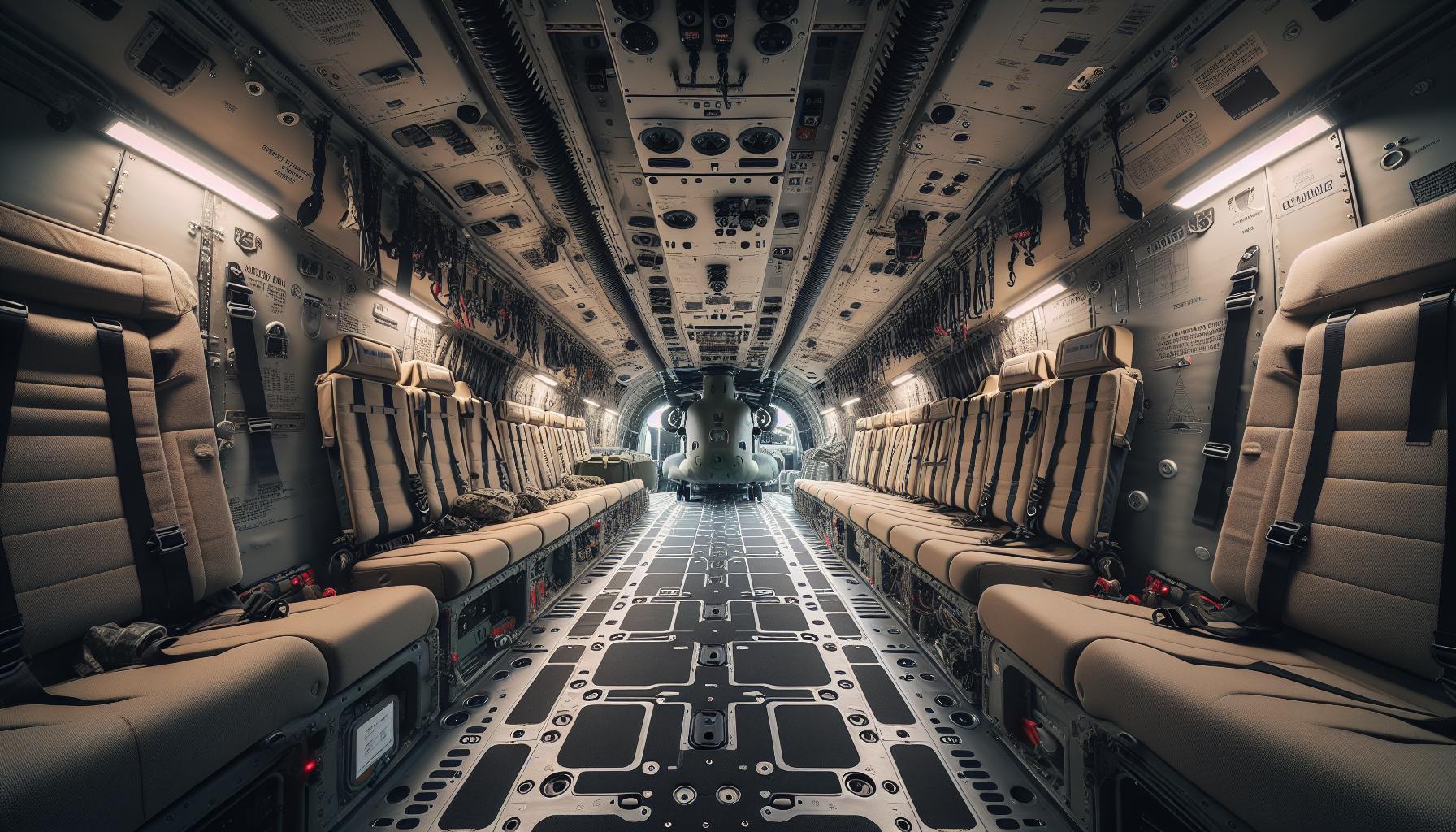
A Closer Look at the Chinook’s Interior Layout
The interior of the Chinook helicopter is a marvel of engineering, designed for versatility and efficiency in a variety of operational contexts. With a cabin that features ample space, it can accommodate a significant payload, whether that’s troops, vehicles, or cargo. The CH-47’s layout prioritizes quick loading and unloading, which is crucial during military operations, humanitarian missions, or disaster response scenarios. The large rear ramp offers easy access, enabling efficient deployment even in dynamic situations.
Inside, the Chinook boasts a spacious cabin with a modular setup. This enables operators to customize the interior based on mission requirements. For instance, seating configurations can be adjusted to transport 33 personnel or maximize cargo space for heavy-lift missions. The aircraft can carry up to 26,000 pounds of internal or external cargo, making it particularly valuable in scenarios requiring rapid response. Additionally, the design incorporates tie-down points to secure various types of loads safely during flight.
Control and Instrumentation
The cockpit of the Chinook is equipped with advanced avionics and a dual control system, enabling either pilot to operate the aircraft effectively. The glass cockpit arrangement includes multiple displays that provide critical flight information while enhancing situational awareness. This setup, combined with the Chinook’s distinctive flight characteristics, allows pilots to manage the aircraft smoothly, even when carrying heavy loads in challenging environments.
In summary, the Chinook’s interior layout is a blend of functionality, adaptability, and technological sophistication. Whether facilitating troop movements during combat or delivering supplies during natural disasters, its design reflects a commitment to meeting the demands of diverse missions. As a result, the Chinook remains a backbone of aviation support, evolving with innovations to enhance its role in modern operations.
Comparing Chinook Variants: CH-47D vs. CH-47F
When it comes to the power and versatility of the Chinook helicopter, the comparison between the CH-47D and CH-47F versions highlights significant advancements made over the decades. Both variants share the iconic twin-rotor design that defines the Chinook, but the updates in the CH-47F make it a crucial asset for modern military operations.
The CH-47D, first introduced in the 1980s, includes a number of upgrades over its predecessors, such as enhanced avionics and a more powerful engine system. This variant is renowned for its capability to transport heavy cargo and perform tactical airlift missions effectively. It features a cockpit with basic instrument displays, which, while functional, lacks the sophistication of more modern systems. Despite its reliability and proven track record during multiple conflicts, the CH-47D’s technology began to show its age as operations became increasingly complex.
In contrast, the CH-47F brings significant innovations that improve operational effectiveness. With a digital fly-by-wire control system and advanced avionics, the CH-47F enhances pilot situational awareness through multifunction displays that provide real-time flight data and mission parameters. This model supports higher payload capabilities and offers improved fuel efficiency, making it more economical for long missions. Additionally, the CH-47F can be adapted for multiple roles, including medical evacuation, disaster relief, and special operations, thanks to its modular internal configuration.
Overall, the shift from the CH-47D to the CH-47F represents not just an evolution of technology, but a commitment to enhancing the safety and effectiveness of operations. The newer variant’s upgrades in avionics and payload capacity align perfectly with today’s challenges in the field, making the Chinook helicopter an enduring symbol of aviation adaptability. Whether serving in combat zones or assisting in humanitarian efforts, both variants exemplify the Chinook’s critical role in modern air mobility.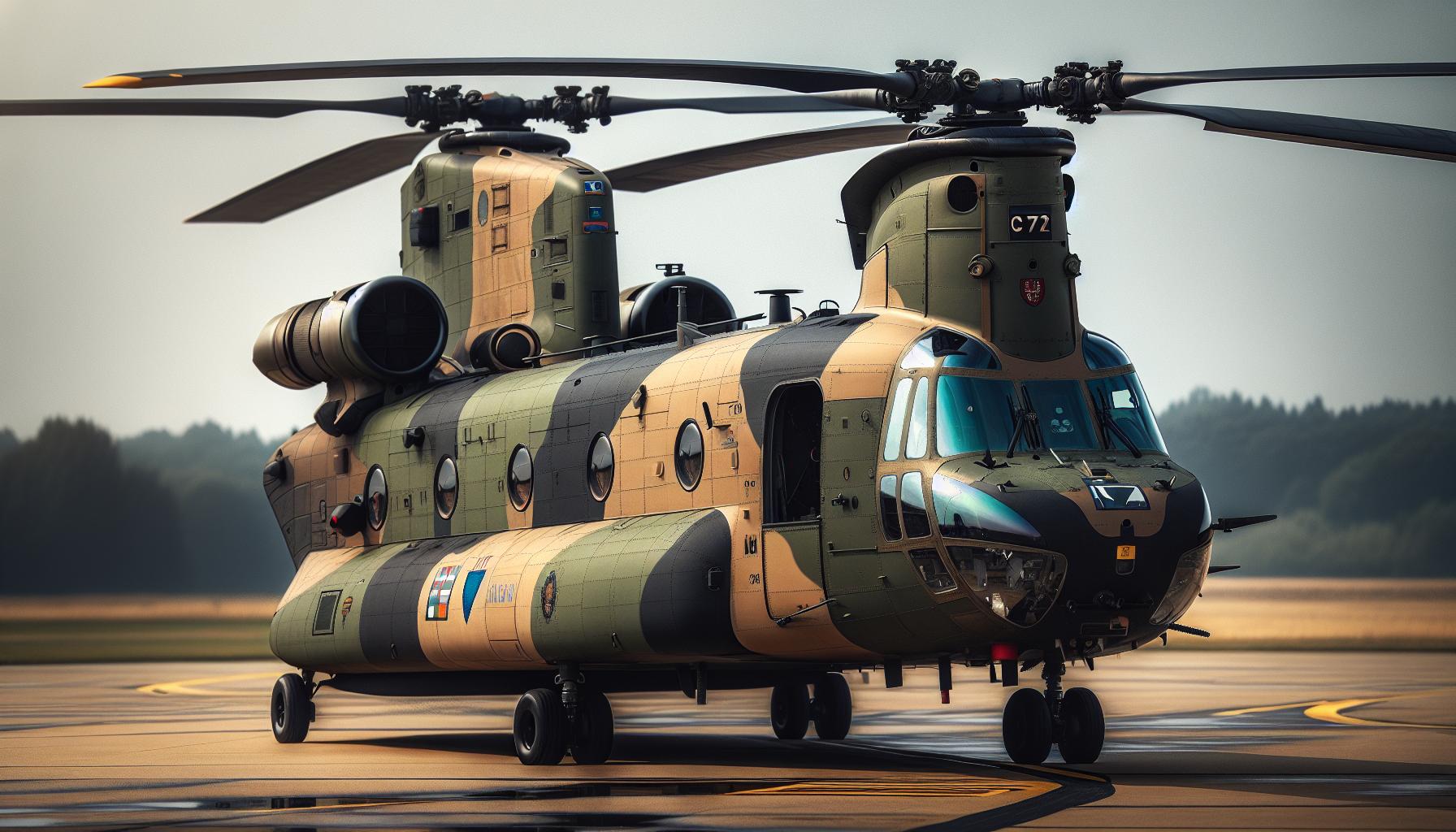
Chinook Helicopter Colors and Markings Explained
The Chinook helicopter’s visual identity is marked by a variety of colors and markings that not only serve aesthetic purposes but also functional and tactical ones. Primarily, the color schemes on Chinook helicopters vary depending on their operational environment and specific roles, ranging from muted military hues to vibrant displays for special missions. Many operational Chinooks are painted in flat black or olive drab, which helps reduce their visibility to enemy forces and minimizes the risk of detection during night or low-light operations.
Common Color Schemes
The typical colors used for Army Chinook helicopters can include:
- Flat Black: Often used by Special Operations units, this color offers low visibility during night operations.
- Olive Drab: A staple for various military aircraft, providing effective camouflage in forested or earthy environments.
- Desert Sand: Employed for operations in arid regions, this lighter color helps shield the aircraft from the harsh sun while blending with its surroundings.
- Gray: Some variants utilize a gray color to adapt to urban environments.
Markings and Identification
Markings are critical for identifying specific units and roles. These can include:
- Squadron Insignia: Unique emblems representing the unit or squadron to which the helicopter belongs.
- Tail Numbers: Each helicopter has a tail number for identification on the ground and in logistics.
- Subdued Versus Bright Markings: During combat, helicopters typically sport subdued markings to minimize visibility; however, during airshows or non-combat operations, brighter colors and logos may be employed.
The painting and marking of Chinook helicopters are not merely about aesthetics. They reflect strategic decisions made to enhance operational effectiveness and ensure crew safety. For instance, color choices and markings are designed to confuse enemy radar and visual detection, which is crucial for successful missions in hostile territories. Additionally, understanding these color schemes can inform aviation enthusiasts and aspiring pilots about the operational contexts in which these aircraft are employed, enriching their knowledge about what makes the Chinook a versatile asset in military aviation.
The Role of Chinook Helicopters in Military Operations
The CH-47 Chinook helicopter plays a pivotal role in military operations, serving as a highly versatile and reliable aircraft for transporting troops, equipment, and supplies under demanding conditions. With its distinctive twin-rotor design, the Chinook is capable of lifting heavy payloads-up to 26,000 pounds-making it indispensable for logistical support in various environments, from combat zones to humanitarian missions.
One of the Chinook’s primary functions is troop transport. It can accommodate up to 55 soldiers or 24 stretchered casualties, which allows it to rapidly deploy forces into strategic locations. This capability was prominently displayed during the Gulf War and in the ongoing conflicts in Afghanistan and Iraq, where timely troop movements can significantly influence operational outcomes. Moreover, the helicopter’s versatility extends beyond personnel transport; it is frequently utilized to reposition essential supplies, heavy equipment, and even artillery, enhancing the operational flexibility of ground forces.
Support in Humanitarian Operations
In addition to military engagements, the Chinook is often employed in humanitarian aid missions, showcasing its adaptability in both military and civilian contexts. Its ability to lift heavy loads makes it ideal for delivering crucial supplies during disaster relief efforts, such as transporting food, medicines, and shelter materials to areas affected by natural disasters. The helicopter’s robust performance in challenging environments demonstrates not only its engineering prowess but also its role in fostering goodwill and support in times of need.
Furthermore, the Chinook’s operational capabilities highlight its importance in special operations missions. The aircraft is frequently used to conduct covert insertions and extractions of special forces, relying on its speed and agility to navigate complex terrain. Its ability to operate at high altitudes and in adverse weather conditions makes it a crucial asset for missions that demand precision and stealth.
Overall, the CH-47 Chinook symbolizes the fusion of advanced technology and practical design, making it a cornerstone of military aviation operations. Whether transporting troops or delivering vital support, its contributions to both military and humanitarian efforts underscore the helicopter’s enduring significance on the battlefield and beyond.
Recent Innovations in Chinook Helicopter Technology
Chinook helicopters have long been at the forefront of military aviation, but recent innovations are propelling the legendary aircraft further into the future. A prime example is Boeing’s commitment to developing the Chinook into an advanced, autonomous system, aiming to keep it operationally relevant well into the 2060s. By integrating cutting-edge technologies, Boeing is transforming the Chinook from a traditional heavy-lift helicopter to a semi-autonomous flying machine capable of performing complex missions with minimal human intervention. This evolution signifies a remarkable shift in aviation, where robotics and artificial intelligence play crucial roles in enhancing operational capabilities and safety in challenging environments.
Some of the notable advancements in Chinook technology include the implementation of a Modular Open Systems Approach (MOSA), which allows for enhanced integration of new systems and capabilities. This model promotes adaptability, enabling future upgrades to be easily integrated without necessitating a complete overhaul of the aircraft. Features like improved avionics, advanced navigation systems, and enhanced communication tools are being introduced to ensure that the Chinook remains a versatile asset in various military scenarios. Such upgrades not only bolster mission efficiency but also aim to reduce operational costs over the helicopter’s lifecycle.
In addition to automation and modularity, recent innovations have also focused on performance enhancements. The Chinook’s engine technology is being refined to improve fuel efficiency and decrease emissions, aligning with a broader push in military aviation towards sustainability. For aspiring pilots and aviation enthusiasts, these advancements illustrate the dynamic nature of helicopter technology and signify a future where Chinooks will not only be vital in combat operations but also in humanitarian relief and disaster response.
As the Chinook continues to evolve, it embodies the perfect blend of tradition and modernity in aviation. Each technological leap opens doors to new possibilities, whether it’s through improved safety mechanisms, increased payload capacities, or more sophisticated cockpit systems. This ongoing transformation not only enhances the capabilities of the Chinook but also inspires a new generation of pilots and engineers eager to be part of its storied legacy.
Chinook Helicopter in Popular Culture and Media
The Chinook helicopter’s striking tandem-rotor design has made it a recurring icon in popular culture and media, capturing the imagination of audiences worldwide. This robust and versatile aircraft has appeared in numerous films, video games, and television shows, often symbolizing military might and reliability. Its distinctive silhouette, characterized by two large rotors mounted one behind the other, not only provides functional benefits but also serves as a visual hallmark that resonates with viewers.
In Hollywood, the Chinook is frequently portrayed in action-packed sequences showcasing aerial maneuvers, troop transport, and heavy-lift capabilities. Movies like Black Hawk Down and We Were Soldiers feature the Chinook prominently, illustrating its critical role in modern military operations. These depictions help convey the helicopter’s importance in combat and rescue missions, while the stunning visuals allow audiences to appreciate its unique design and engineering. The sheer size and power of the Chinook create dramatic scenes that enhance storytelling, making it a favorite among filmmakers seeking to capture the intensity of military life.
Beyond films, the Chinook has established a notable presence in video games too. Titles like Call of Duty and Battlefield prominently feature the aircraft, allowing players to engage in high-stakes missions involving air support and troop deployment. These interactive experiences provide a fun yet educational context for understanding the helicopter’s functionalities. They stimulate interest in aviation and military careers among younger audiences, potentially inspiring the next generation of pilots and engineers eager to explore aircraft like the Chinook.
While the Chinook’s presence in media is often highlighted in thrilling scenarios, it is essential to acknowledge the real-life incidents and tragedies that have involved this impressive machine. Recognizing the sacrifices made by crew members and soldiers during Chinook operations is crucial. Each loss is a poignant reminder of the risks involved in military aviation and the importance of safety protocols. By respecting these stories, we honor the lives lost while celebrating the Chinook’s legacy in both real-world missions and its representation in popular culture.
As the Chinook continues to evolve, its appearances in media reflect not only its current relevance but also a lasting legacy that bridges traditional military aviation with modern storytelling, inspiring curiosity and admiration among global audiences.
Challenges and Safety Concerns of Chinook Operations
The Chinook helicopter, renowned for its unique twin-rotor design, has proven itself in various military operations, but it has not been without its challenges and safety concerns. Recent incidents highlight potential hazards that affect both the aircraft’s reliability and safety protocols. For instance, a series of engine fires led to the grounding of the Army’s Chinook fleet, with four reported fires within a mere three months, raising significant concerns regarding the maintenance systems and the potential for oversight in documentation related to safety-critical components [[2]].
Safety-critical systems on the Chinook, such as those associated with the engine and flight control, must operate flawlessly to ensure the aircraft’s safe operation. Previous incidents of malfunctions, like the dangerous flaw found in the Fadec (Full Authority Digital Engine Control) system, also remind us of the potential risks. Such flaws have been linked to fatal accidents, emphasizing the importance of continual checks and updates in safety protocols to prevent recurring issues [[3]].
The implications of these challenges resonate deeply within the aviation community. Maintaining operational integrity requires rigorous training for Chinook pilots and crew, focusing on emergency procedures and system diagnostics. Aspiring pilots should be well aware of the realities of military aviation, including the demanding maintenance and safety standards necessary for operating such complex aircraft. The dual-rotor mechanism, while advantageous for load capacity and stability, also requires careful attention to prevent mechanical failures-making regular inspections and adherence to strict operational protocols imperative.
As demonstrated by recent grounds and incidents, the risks inherent in Chinook operations are substantial. However, by understanding these challenges and the critical nature of safety measures, the aviation community can foster better practices. This vigilance not only honors those who have faced the ultimate sacrifice during operations but also enhances the future of Chinook helicopter missions by ensuring safety remains a top priority in aviation practices.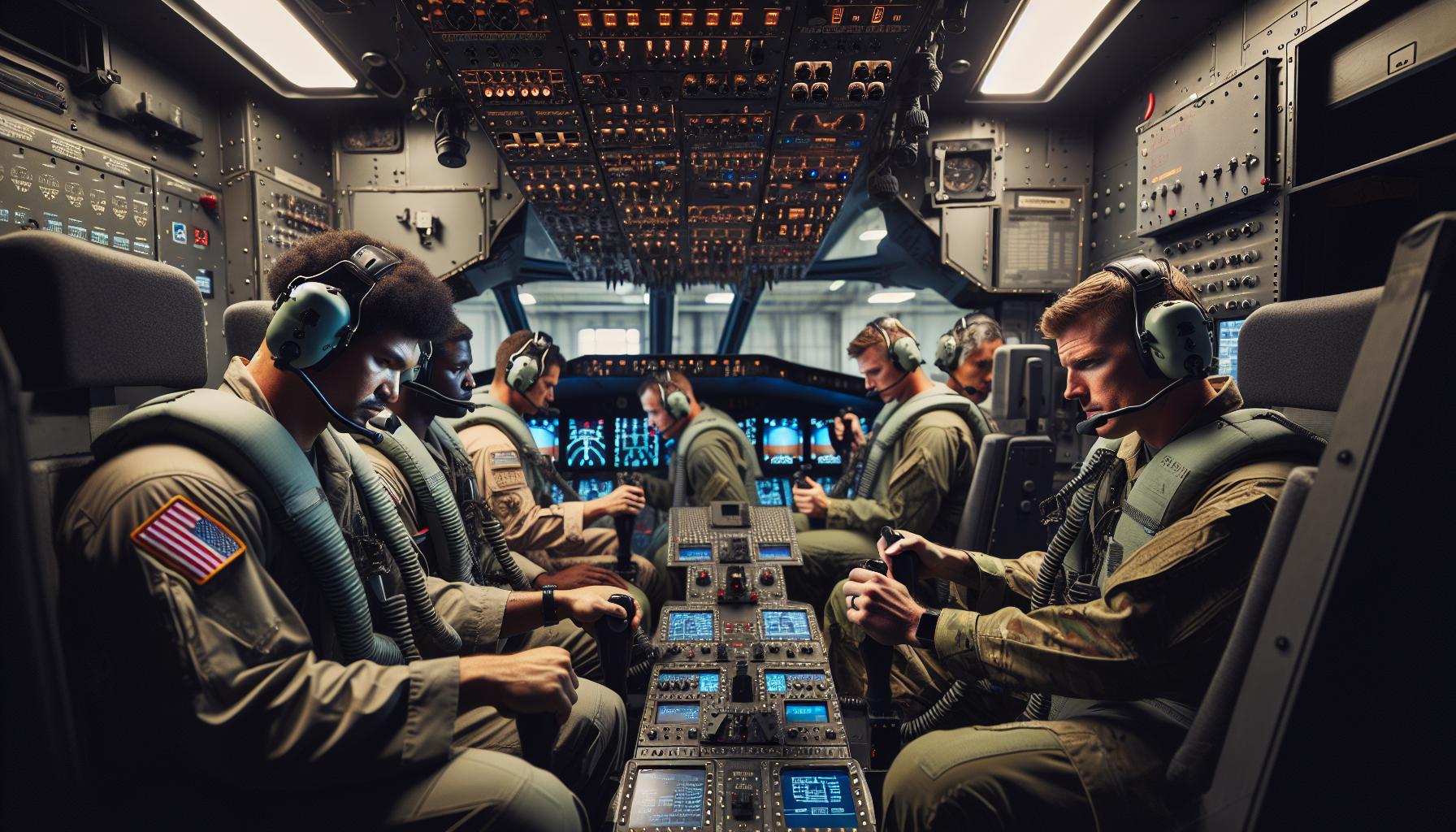
Becoming a Chinook Pilot: Training and Skills Required
To fly a Chinook helicopter, one of the most formidable transport aircraft in military aviation, aspiring pilots must embark on a journey filled with rigorous training and skill development. The Chinook, with its distinctive twin-rotor design, presents unique challenges and opportunities for pilots. Understanding this robust aircraft’s complexities is fundamental to mastering its operation.
First and foremost, becoming a Chinook pilot requires a solid foundation in aviation basics. This typically involves obtaining a private pilot license (PPL) followed by an instrument rating (IR) and finally a commercial pilot license (CPL). For military candidates, candidates often progress through structured flight training programs that combine classroom instruction with practical flight experience. Here, they learn to manage the challenges posed by the Chinook’s twin-rotor configuration, which demands heightened situational awareness and precision in maneuvering.
Key Training Areas
- Flight Operations: Pilots learn how to execute various maneuvers specific to the Chinook, including hovering, vertical takeoff, and landing techniques unique to its dual-rotor setup.
- Emergency Procedures: Training emphasizes responding to engine failures, system alerts, and in-flight emergencies. Understanding and practicing these scenarios ensure safety and preparedness.
- Crew Coordination: As a tandem aircraft, effective communication with co-pilots and crew is critical. Training often includes simulations that enhance team dynamics and operational efficiency.
- Maintenance Knowledge: Familiarity with the Chinook’s mechanical systems is invaluable. Aspiring pilots receive insights into pre-flight checks and maintenance protocols to ensure reliability and safety during operations.
The Path to Proficiency
After initial training, continued professional development is essential. Pilots typically gain experience through various flight hours accumulated in both training and real-world missions. This not only hones their flying skills but also builds confidence in handling the aircraft under diverse conditions. The challenging nature of military operations, combined with the aircraft’s size and complexity, underscores the need for pilots to be not only skilled aviators but also adaptable leaders capable of making critical decisions on the fly.
The journey to becoming a Chinook pilot is demanding, but for those fascinated by aviation and eager to operate an aircraft with extraordinary capabilities, it is profoundly rewarding. By investing time in understanding the aircraft’s systems and flight dynamics, aspiring pilots prepare themselves to embrace the unique challenges and experiences that come with flying one of the military’s most iconic helicopters.
Future of Chinook Helicopters in Aviation
As the aviation landscape evolves, the Chinook helicopter remains a pivotal player, poised for adaptation in an ever-changing environment. With its iconic twin-rotor design, the Chinook’s versatility has allowed it to thrive in various military and humanitarian operations since its introduction. Looking ahead, several trends and innovations will likely shape the future of this extraordinary aircraft.
Modernization efforts are at the forefront of enhancing Chinook capabilities. Upgrades like the Block II variant introduce state-of-the-art technologies, such as redesigned fuel systems and improved drivetrains, which are vital for meeting today’s heavy-lift mission requirements while enhancing operational efficiency and safety. Advanced avionics and automation features are also making their way into the cockpit, allowing pilots to execute missions with greater precision and reducing workload. This is particularly critical as the demand for adept pilots continues to grow alongside increasing mission complexities.
Additionally, the global defense landscape is shifting. Nations are recognizing the value of heavy-lift helicopters, not just for military combat but also for disaster relief, logistics support, and humanitarian missions. This broadening scope opens avenues for Chinook operations in peacekeeping and support missions across diverse terrains, from natural disaster zones to remote military outposts. Countries such as Canada, the UK, and others have already integrated Chinook helicopters into their fleets, strengthening international cooperation and operational capabilities.
Another exciting development is the exploration of hybrid and electric technologies that could transform the way the Chinook operates. As sustainability becomes a critical concern in aviation, future versions may see a hybrid power system that reduces fuel consumption and emissions while maintaining the helicopter’s impressive lift and range. This transition aligns with the broader push towards environmental responsibility in military operations, demonstrating that innovation can harmonize with ecological considerations.
The future appears bright for Chinook helicopters, as they continue to adapt and integrate advanced technologies. For those fascinated by aviation and contemplating a career as a Chinook pilot, there could be numerous opportunities as the aircraft evolves. Aspiring aviators may find themselves piloting the next generation of Chinook helicopters, equipped with cutting-edge systems ready to tackle real-world challenges. The blend of tradition and innovation ensures that the Chinook will remain a vital component of aviation for years to come.
FAQ
Q: What is the main feature of a Chinook helicopter’s twin-rotor design?
A: The twin-rotor design of the Chinook helicopter is characterized by two large, counter-rotating rotors located at the front and rear. This configuration enhances lift capacity, stability, and allows for better maneuverability compared to single-rotor helicopters.
Q: How does the Chinook’s twin-rotor design improve its flight performance?
A: The counter-rotating rotors of the Chinook significantly reduce torque effects, leading to improved stability and control during flight. This design allows the helicopter to transport heavier loads effectively while maintaining agility.
Q: Why do Chinook helicopters use a tandem rotor system?
A: Chinook helicopters utilize a tandem rotor system to distribute weight and balance more effectively. This setup allows for a larger loading area and helps in achieving higher lift for transporting troops and heavy equipment.
Q: What are the visual characteristics of the Chinook helicopter?
A: The Chinook helicopter features a distinctive bulky fuselage, dual rotors, and a rear ramp for loading and unloading cargo. It often showcases a military green or gray paint scheme with various decals representing its squadron.
Q: How does the size of a Chinook helicopter compare to other helicopters?
A: The Chinook helicopter is significantly larger than many traditional helicopters, measuring about 99 feet in length. Its dual rotors also make it one of the most recognizable aircraft in the sky due to its impressive wingspan and height.
Q: What impact does the twin-rotor design have on Chinook’s maintenance?
A: While the twin-rotor design increases the complexity of maintenance due to more moving parts, it also reduces stress on individual rotors, potentially leading to longer service intervals compared to single-rotor helicopters.
Q: Can you explain how the twin-rotor design affects the noise levels of a Chinook helicopter?
A: The twin-rotor design can produce varying noise levels due to the interaction of the rotors. When optimized, it can reduce the overall noise compared to single rotor designs by balancing rotor wash and reducing turbulent air.
Q: Where can I learn more about the Chinook helicopter’s capabilities and design?
A: For an in-depth understanding of the Chinook helicopter’s design and capabilities, check out sections on its aerodynamics and key features in specialized aviation articles or visit dedicated aviation websites.
To Conclude
Thank you for exploring the fascinating twin-rotor design of the Chinook helicopter with us! This heavy-lift marvel not only showcases remarkable engineering but also plays a vital role in military and humanitarian missions worldwide. If you’re captivated by aviation, delve deeper into related topics like the evolution of military helicopters or how twin-rotor configurations impact performance.
Don’t miss out on our exclusive content! Subscribe to our newsletter for the latest insights into helicopter technology and aviation careers. Interested in how you can experience flying one for yourself? Check out our guide on seeking flight training. Your journey into the world of helicopters doesn’t have to end here-explore more and join the conversation in the comments below! Remember, every view and share helps foster a community of passionate aviation enthusiasts.
Get our latest guides, news, and insights highlighted in your Google Search & AI Overviews.