Have you ever marveled at the mechanics of flight, even in the simplest forms? The balloon helicopter, a delightful DIY project, combines fun and learning as it demonstrates essential principles of aerodynamics and energy. This hands-on activity not only sparks curiosity but also serves as an engaging way to introduce children and adults alike to the wonders of flight. Whether you’re a parent looking for an entertaining science experiment or a hobbyist eager to delve into the basics of flight mechanics, this guide will walk you through creating your very own balloon-powered helicopter. Get ready to launch into a world of creativity and discovery, adding a playful twist to your understanding of how things fly!
How Balloon Helicopters Work: The Science Behind the Fun
Creating a balloon helicopter combines fun with fundamental physics, showcasing the playful side of aerodynamics. At its core, this simple toy is a brilliant demonstration of how lift and thrust work together to enable flight. When you inflate a balloon and release it, the air escaping creates a force that propels the helicopter upwards. This action is a practical application of Newton’s third law of motion: for every action, there is an equal and opposite reaction. The balloon pushes the air downward, and in response, the helicopter flies upward.
How It Works
When the balloon’s nozzle is opened, air pushes out rapidly, which causes the rotor blades of the helicopter to spin. As these blades slice through the air, they generate lift due to their shape and the angle at which they meet the oncoming air. The combination of thrust provided by the escaping air and the aerodynamic lift created by the blades allows the balloon helicopter to rise and hover briefly before descending. This makes it not just a toy but a fascinating educational tool for understanding basic concepts of flight physics.
To enhance the experience, experimenting with various designs can lead to different flight characteristics. For example, altering rotor size, shape, and even the weight of the balloon can yield exciting results. Understanding these principles is valuable not only for DIY enthusiasts but also for educators looking to incorporate hands-on science activities into their lessons about aerodynamics and forces.
Whether you’re making these for fun or for learning, balloon helicopters provide an engaging way to explore the principles of flight, making them a perfect project for curious minds of all ages.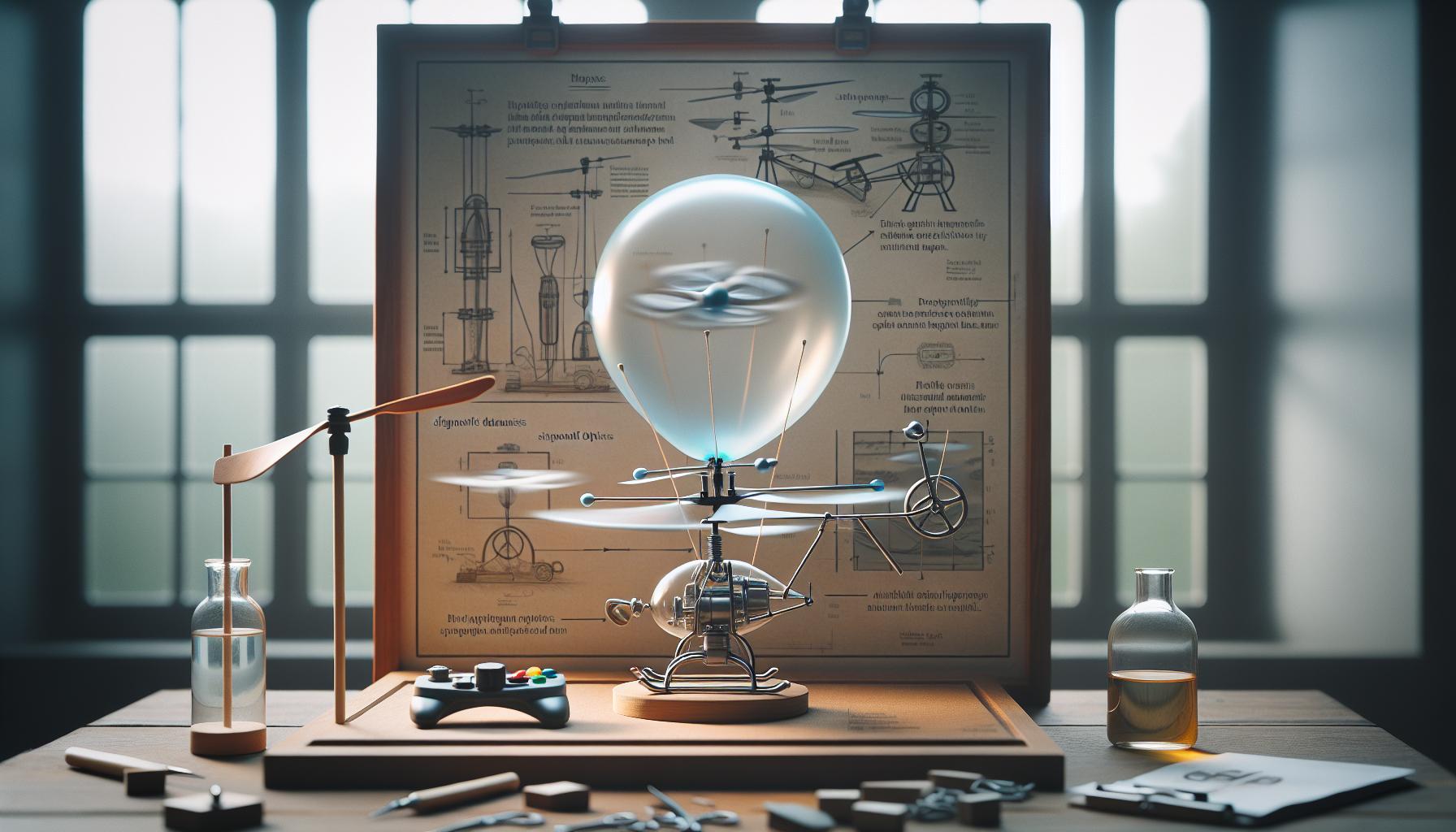
Essential Materials for Your DIY Balloon Helicopter
Creating your own balloon helicopter is not only a delightful activity but also an introductory lesson in physics, aerodynamics, and creativity. To embark on this fun DIY project, gathering a set of essential materials is key to ensuring a successful flight for your homemade helicopter. Here’s a look at what you’ll need to get started.
Essential Supplies
Here are the basic materials required to build a balloon helicopter:
- Balloon: The core component that generates thrust. Any standard balloon will work, but larger ones typically provide better lift.
- Straws: You’ll need a few bendy straws to act as the rotor blades. Three straws work well for creating a stable rotor system.
- Tape: Essential for securing various components together, ensuring everything stays in place during takeoff.
- Scissors: Necessary for cutting the straws and any other materials to your desired lengths.
- Construction paper: Optional but useful for adding weight to the helicopter or for crafting the base.
- Hot glue gun (optional): If you prefer a more permanent assembly, a glue gun can help secure parts effectively.
Gathering Your Materials
Before you start building, collect these materials in a workspace that allows for creativity and experimentation. You can often find most items around the house or at local craft stores. This project not only encourages crafting skills but also serves as a springboard for discussions about flight dynamics and engineering principles.
If you decide to follow online video tutorials, like those available on platforms such as YouTube, you may discover additional tricks and tips for enhancing your balloon helicopter’s performance through creative adaptations of these basic materials [[2]](https://www.youtube.com/watch?v=UXxfue6vtow). As you prepare to build, remember that the joy of this project lies not just in the final result but in the process of discovery and learning.
Step-by-Step Guide to Building Your Balloon Helicopter
Creating a balloon helicopter is not only a fun project but also a fantastic way to demonstrate principles of physics and aerodynamics. To build your own, follow these simple steps that will guide you through the process in an engaging and hands-on manner.
Start by cutting three straws to equal lengths, about 6-8 inches each. These will act as the rotor blades of your helicopter. On one end of a larger straw, which will serve as the body, tape the three cut straws at equal intervals so they extend outward like a propeller. Make sure they are secure and perpendicular to the body of the helicopter to ensure stable flight.
Next, inflate your balloon but don’t tie it off yet. Instead, hold the end of the balloon tightly to trap the air. Attach the balloon to the top end of the larger straw using tape, ensuring it’s sealed well enough to prevent any air from escaping prematurely when released. Leave a small opening to help maintain pressure.
With your helicopter assembled, it’s time for the exciting part: the launch! Find an open space, hold the larger straw without covering the balloon, and release it. The escaping air from the balloon will forcefully exit downwards, and the angled straws will catch the air, causing the helicopter to spin upwards as it ascends.
Test different balloon sizes and straw configurations for unique designs and enhanced flying capabilities. Have fun experimenting with the lengths of the straws or adding weights made from construction paper to see how changes affect flight performance. Each variation can lead to fascinating discussions about the science of flight and engineering principles!
Tips to Improve Your Balloon Helicopter’s Performance
To enhance the performance of your balloon helicopter, it’s essential to consider various aspects of its design and construction. Minor modifications can significantly impact how well your helicopter flies and how high it rises. Here are some effective tips to optimize your balloon helicopter experience:
Balancing Weight and Design
The weight distribution of your helicopter greatly influences its flight. If the device tilts or spins erratically, try adding small weights made from lightweight materials like paper or tape to the bottom of the rotor blades. This technique can help stabilize the helicopter and improve its ascension. Experiment with different placements of the weights to find the best balance.
Choosing the Right Balloon
The balloon is a crucial component for lift. Consider using balloons of different sizes and shapes. Larger balloons can provide more air pressure and longer flight times, while smaller ones may yield quicker bursts of speed. Always check for leaks before launching, as even the smallest pinhole can drastically reduce performance.
Optimizing Straw Length
Your choice of straw length can dictate the effectiveness of your helicopter’s propeller mechanism. Straws that are too long may create drag, while those that are too short won’t catch enough air. The ideal length typically ranges from 6 to 8 inches, but feel free to test variations to see how they affect flight patterns. Adjust the angle of the straws; experimenting with a slight upward tilt can improve lift efficiency.
Creating Aerodynamic Features
To enhance airflow around your helicopter, consider adding curved or angled designs to the rotor blades. This adjustment can help catch the air more efficiently, leading to improved lift. You might also want to sand down any rough edges of cutting to ensure smoother airflow.
These tips not only make the balloon helicopter more fun to fly but also provide valuable insights into the principles of aerodynamics and engineering. As you experiment with your designs, you’ll gain a deeper appreciation for how physics governs flight, sparking curiosity and encouraging learning about flight mechanics. Enjoy the process of discovery, and don’t hesitate to share your findings with others!
Common Mistakes to Avoid When Crafting Your Helicopter
Creating a balloon helicopter can be a delightful and educational experience, but common pitfalls can hinder your project’s success. Understanding these missteps can make a significant difference in both flight performance and enjoyment. For instance, one major mistake is neglecting to check the integrity of the balloon before launch. Small leaks can dramatically reduce lift, leading to premature crashes. Always inspect for pinholes or weak seams and conduct a quick test inflation to ensure it’s ready for action.
Another frequent oversight is the improper alignment of the rotor blades. If they’re angled incorrectly, they won’t effectively catch the air, resulting in poor flight or erratic spinning. Ensure that your blades are straight and balanced-adjust their angle slightly upwards to maximize lift. Additionally, including too much weight can weigh down your creation, making it difficult for the balloon to provide sufficient lift. Aim for a lightweight structure and distribute any necessary weights strategically to help stabilize the flight.
It’s also important to use the right length for your straws; choosing straws that are too long can create unnecessary drag, while very short straws may not capture enough air. Finding an optimal length, typically around 6 to 8 inches, can help achieve a balanced design that promotes efficiency. Test various lengths to see what works best for your specific design.
Lastly, many beginners overlook the basics of aerodynamics in their designs. Simple modifications, such as smoothing out rough edges on rotor blades or experimenting with different blade shapes, can enhance air flow and lead to better performance. By focusing on these areas, you can avoid common mistakes and help your balloon helicopter soar to new heights of success!
Creative Variations: Experimenting with Designs
Experimenting with designs can transform a simple balloon helicopter into a dazzling display of creativity and engineering prowess. By varying the components and structures, you can explore different aerodynamic principles and learn about the effects of design on flight performance. Why settle for a basic model when you can create unique versions that catch the eye and spark interest?
One exciting way to innovate is by modifying the rotor blade design. Instead of standard flat blades, try experimenting with different shapes like curved or spiral blades to see how these variations affect lift and stability. You could even craft blades from various materials, such as lightweight cardboard or plastic, to evaluate how weight and rigidity influence your helicopter’s flight. This experimentation opens up opportunities to compare performance metrics and understand the balance of forces acting on the model.
Additionally, consider altering the size and shape of the body of the helicopter. For instance, using a larger balloon could increase lift, while a smaller, more aerodynamic body might increase speed. You can also incorporate colorful decorations or themes, such as turning your helicopter into a favorite character or animal. A fun twist is to challenge friends to create themed models for races or competitions, combining creativity with friendly rivalry.
Lastly, integrating technology can take your balloon helicopter to the next level. For tech-savvy builders, consider using lightweight sensors or cameras for aerial photography during flights. This not only enhances the fun but also allows for discussions about drone technology and its applications in various fields like search and rescue, film, and inspection of hard-to-reach places. When you push the boundaries of design, you not only enjoy the process of creation but also gain invaluable insights into the principles of physics and engineering that govern flight.
Fun Ideas for Balloon Helicopter Races and Challenges
Creating balloon helicopter races or challenges adds a thrilling element to your DIY project. Not only do these activities foster creativity and engineering skills, but they also encourage friendly competition. Imagine the excitement as you and your friends launch your colorful flying creations to see whose design soars the highest or travels farthest!
Types of Races and Challenges
There are countless ways to turn your balloon helicopter creations into competitive events. Here are a few engaging ideas to consider:
- Distance Race: Set up a starting point and see whose helicopter can travel the farthest. Use a measuring tape to track distances and encourage participants to experiment with different sizes and shapes of balloons.
- Speed Trials: Time how long it takes for each helicopter to travel a predetermined distance. This can inspire participants to optimize their designs for speed, uniting fun and science.
- Height Challenge: Use a set point as a marker and see which helicopter can reach the highest altitude. This could be competed indoors with high ceilings, or outdoors on a calm day.
- Aesthetics Competition: While flight performance is key, creativity in design is equally valuable. Offer a prize for the most creatively decorated or designed helicopter, encouraging participants to showcase their artistic skills.
Be sure to use a stopwatch or measuring tools to keep things fair and fun!
Preparation and Setup
To host an effective balloon helicopter race, logistics are important. Make sure to:
- Choose an appropriate location: An open, airy space is ideal, where obstacles like trees or buildings won’t interfere with the flight paths.
- Gather necessary materials: Ensure all participants have the essential materials for building their helicopters. You can set a time limit for building to keep excitement high.
- Establish rules: Having clear guidelines helps to avoid confusion during the race. Discuss the criteria for winning and how results will be measured.
Include a post-race analysis session where participants can share their insights about what worked and what didn’t. This encourages learning and invites everyone to innovate for the next round!
Engaging Everyone
For added fun, include various age groups or skill levels. You can have teams or mixed pairings, balancing advanced builders with beginners to foster teamwork and learning. Consider introducing modifiers, such as requiring teams to use specific materials or themes for their designs, prompting creativity and strategic thinking.
These challenges not only promote STEM learning but also create lasting memories among participants, combining creativity, engineering fundamentals, and a spirit of fun. Encouraging everyone to experiment with their designs can lead to surprising new discoveries in how balloon helicopters perform, ensuring that each race is unique and exciting!
Educational Benefits of Balloon Helicopter Projects
Creating a balloon helicopter is more than just a fun DIY project; it’s an engaging way to weave fundamental educational concepts into hands-on learning. As students design, build, and test their helicopters, they explore principles of physics, engineering, and creativity. This process can boost their confidence, enhance critical thinking, and foster a love for STEM (science, technology, engineering, and mathematics) subjects.
Through the simple act of constructing a balloon helicopter, learners encounter essential scientific principles like aerodynamics and force dynamics. As they adjust their designs to achieve better flight, they apply critical concepts such as lift, gravity, and thrust. The iterative nature of engineering-designing, testing, and modifying-aligns perfectly with educational best practices, allowing students to experience trial and error while making connections to real-world applications. For example, they might discover that a wider propeller generates more lift, or that altering the weight distribution can affect flight stability.
Moreover, these projects encourage teamwork and collaboration. When participants work together to brainstorm designs, they not only share knowledge but also develop essential soft skills such as communication and problem-solving. Group activities, like balloon helicopter races, can create a lively learning environment that motivates students to engage with the material actively. By turning a simple craft into a competitive and collaborative challenge, educators can address various learning styles and encourage participation from all students.
In addition to scientific literacy, building balloon helicopters promotes creativity and innovation. As students experiment with different materials and designs, they learn to appreciate the importance of design iteration and the creative process in engineering. This hands-on experience can inspire students to explore further educational pathways in technology and aviation, potentially igniting a future career interest in these fields.
Incorporating Balloon Helicopters into Science Lessons
offers a dynamic opportunity for students to engage with fundamental principles of physics and engineering through a hands-on approach. This engaging activity not only captures students’ attention but also fosters a deeper understanding of key concepts such as aerodynamics, lift, and force dynamics. By creating and testing their own balloon helicopters, students experience the scientific method in action: hypothesizing, experimenting, and analyzing results.
Practical Integration into Curriculum
Educators can seamlessly integrate balloon helicopter projects into various subjects within the curriculum. For example, in physics classes, instructors can tie the experience to discussions about forces-detailing how lift is generated and the effects of gravity. Additionally, to enhance mathematical skills, students can measure flight distance and altitude, allowing for real-world applications of mathematical concepts such as data collection and graphing.
Complementing the balloon helicopter project with discussions about real-life aviation can spark interest in careers in the fields of aeronautics and engineering. Teachers might showcase how engineers design helicopters with specific materials and features to optimize performance. By relating these lessons to everyday technology, students can appreciate the broader implications of their learning and envision potential career paths.
Collaborative Learning Environments
Creating a collaborative environment enhances the learning experience. Students can work in groups to brainstorm different helicopter designs, fostering teamwork and communication. Such collaboration deepens their understanding as they discuss the reasoning behind their design choices and troubleshoot issues together. For instance, if one group observes that their helicopter did not fly well, they can use that as a learning moment to hypothesize why-a principle of peer-led learning that encourages critical thinking.
Ultimately, transforms traditional education into an interactive exploration of science. This not only nurtures inquiry-based learning but also ignites curiosity, making complex concepts accessible and comprehensible. Through this process, students can develop not only scientific literacy but also an enthusiasm for STEM disciplines, paving the way for future innovation and exploration.
How to Troubleshoot Your Balloon Helicopter Issues
Building a balloon-powered helicopter can be an exhilarating DIY project, but sometimes the excitement fizzles out when your creation doesn’t perform as expected. Luckily, troubleshooting common issues can help you understand the mechanics behind the fun, leading to a more successful flight. Whether you’re getting minimal lift or your helicopter isn’t flying at all, there are several key factors to consider that can make all the difference.
First, check the balloon. Make sure it is properly inflated and securely attached to the helicopter’s frame. Leaks or a poorly sealed connection can significantly reduce the thrust from the escaping air. Additionally, inspect the type of balloon used; a thicker balloon might retain more air longer, but it can also restrict airflow, while a thinner balloon may allow for a quicker release but won’t provide as much lift. If your helicopter is underperforming, try experimenting with different balloon sizes and types to see how they affect flight.
Next, evaluate the rotor blades. Improperly shaped or uneven blades can disrupt airflow, impairing lift. Ensure that the blades are symmetrical and balanced; an imbalance can cause your helicopter to spin uncontrollably or not gain the desired height. You might want to adjust the length of the blades or try different materials-some lightweight paper or plastic may provide better performance than heavier materials.
Another crucial aspect is the overall structure. The helicopter’s weight plays a significant role in its ability to fly. Examine the materials you used for the frame and any components that may add unnecessary weight. Opt for lighter materials where possible, and consider simplifying the design if you encounter recurring issues.
Should you find that your helicopter takes off but quickly spins out of control or descends too rapidly, it may be an issue with the angle of the rotor blades or the positioning of your balloon. Adjusting the blade angles and where the balloon is attached can help find a sweet spot that balances the forces acting on the helicopter.
Troubleshooting isn’t just about fixing problems; it’s also an opportunity for learning. As you experiment and adjust your design, you can observe the principles of aerodynamics in action. This process would not only enhance your DIY skills but can also reinvigorate your understanding of science, especially if you document your findings and share them with others.
By staying curious and willing to learn from each flight, you can transform challenges into triumphs in your balloon helicopter journey.
Resources for Further Learning and Inspiration
Exploring the world of balloon helicopters opens doors to a wealth of knowledge and creativity. These simple yet fascinating devices illustrate fundamental principles of physics and engineering while providing endless opportunities for experimentation and fun. To enhance your understanding and spark your imagination, consider diving into various resources that can deepen your knowledge and inspire new ideas.
Books and Online Courses
There are many books and online courses dedicated to basic aerodynamics and engineering concepts that can support your balloon helicopter project. Look for texts that cover fundamental physics tailored for young learners or DIY enthusiasts. Websites like Coursera and Khan Academy offer free tutorials on physics topics such as force, motion, and lift – all vital to understanding how your balloon helicopter works.
STEM Kits and Workshops
Participating in local STEM workshops or purchasing educational kits can provide hands-on experience. Many kits specifically designed for building flying toys or exploring aerodynamics include materials and instructions for creating balloon-powered vehicles. These practical experiences not only hone your skills but also connect you with like-minded enthusiasts. Local science fairs and maker spaces often host events where you can compete or collaborate in building balloon helicopters and other flying crafts.
Online Communities and Social Media
Engaging with online communities can be an excellent way to share successes and troubleshoot challenges. Platforms like Reddit and Facebook have groups dedicated to DIY projects, science experiments, and aerodynamics. Sharing your balloon helicopter experiences or seeking advice from seasoned builders can offer fresh insights and inspiration. YouTube also hosts countless tutorial videos and demonstrations, such as those focused on balloon helicopters, providing visual guidance to fuel your creativity.
Experimentation and Creative Challenges
Don’t hesitate to innovate! Use your balloon helicopter as a springboard for creative experimentation. Consider designing variations with different materials, shapes, or mechanisms. Challenge yourself or friends to competitive balloon helicopter races to see whose design can fly the farthest or last the longest in the air. Document your findings and share them on your blog or social media; not only does this solidify your learning, but it also inspires those around you to explore and create.
Utilizing these resources will not only enhance your balloon helicopter project but also foster a love for science and engineering that can lead to future interests and career paths. Whether you are a casual hobbyist or a serious aviation enthusiast, the journey with balloon helicopters is just the beginning of an exciting adventure in understanding flight.
Frequently Asked Questions
Q: What are the best materials for making a balloon helicopter?
A: To create a balloon helicopter, you’ll need basic materials like a balloon, lightweight plastic or cardboard for the rotor, a straw, and scissors. Using lightweight materials ensures your helicopter will fly efficiently. For more detailed instructions, check the section on *Essential Materials for Your DIY Balloon Helicopter*.
Q: How can you enhance the flight time of a balloon helicopter?
A: To improve your balloon helicopter’s flight time, make sure to *inflate the balloon fully* without stretching it too much, and ensure the rotor blades are balanced. You can also reduce weight by using thinner materials for the rotors. For more performance tips, see *Tips to Improve Your Balloon Helicopter’s Performance*.
Q: What common mistakes should I avoid when making a balloon helicopter?
A: Common mistakes include using heavy materials that can hinder flight, improperly balancing the rotors, or not securing the balloon tightly. Make sure to read the *Common Mistakes to Avoid When Crafting Your Helicopter* section for more insights.
Q: Can I use different designs for a balloon helicopter?
A: Yes, experimenting with various rotor shapes, sizes, and materials can yield interesting results. Try triangular or circular rotor designs for different flight dynamics. For more creative options, explore the *Creative Variations: Experimenting with Designs* section.
Q: What is the educational value of making a balloon helicopter?
A: Building a balloon helicopter teaches principles of physics, such as force, lift, and aerodynamics. It’s a fun, hands-on activity that encourages problem-solving and critical thinking skills. See the *Educational Benefits of Balloon Helicopter Projects* for more educational insights.
Q: How can I troubleshoot issues with my balloon helicopter not flying?
A: If your balloon helicopter isn’t flying, check for air leaks in the balloon, ensure the rotors spin freely, and confirm the balloon is inflated properly. For a more detailed troubleshooting guide, refer to the section on *How to Troubleshoot Your Balloon Helicopter Issues*.
Q: What are fun ways to race balloon helicopters?
A: Organize races by creating a course with obstacles where participants launch their helicopters simultaneously. Use timers to track flight times. For more ideas, check out the *Fun Ideas for Balloon Helicopter Races and Challenges* section.
Q: Where can I find more resources for balloon helicopter projects?
A: Beyond this guide, look for videos and tutorials on platforms like YouTube or specific DIY websites, as well as STEM educational resources. See the *Resources for Further Learning and Inspiration* section for curated links.
Future Outlook
Now that you’ve learned how to make your own balloon helicopter, it’s time to take flight with your new skills! This simple yet fascinating DIY project not only provides hours of fun but also helps you explore the science of flight in a hands-on way. If you enjoyed this guide, why not check out our other creative projects like the Easy Paper Helicopter Craft or our DIY Helicopter tutorial for even more ideas?
Don’t forget to share your balloon helicopter designs with us in the comments below! Have questions or need tips on improving your build? We’re here to help. And if you want to keep the creativity flowing, subscribe to our newsletter for regular updates on upcoming projects and fun DIY ideas. Let’s keep exploring the exciting world of aviation together!
Get our latest guides, news, and insights highlighted in your Google Search & AI Overviews.