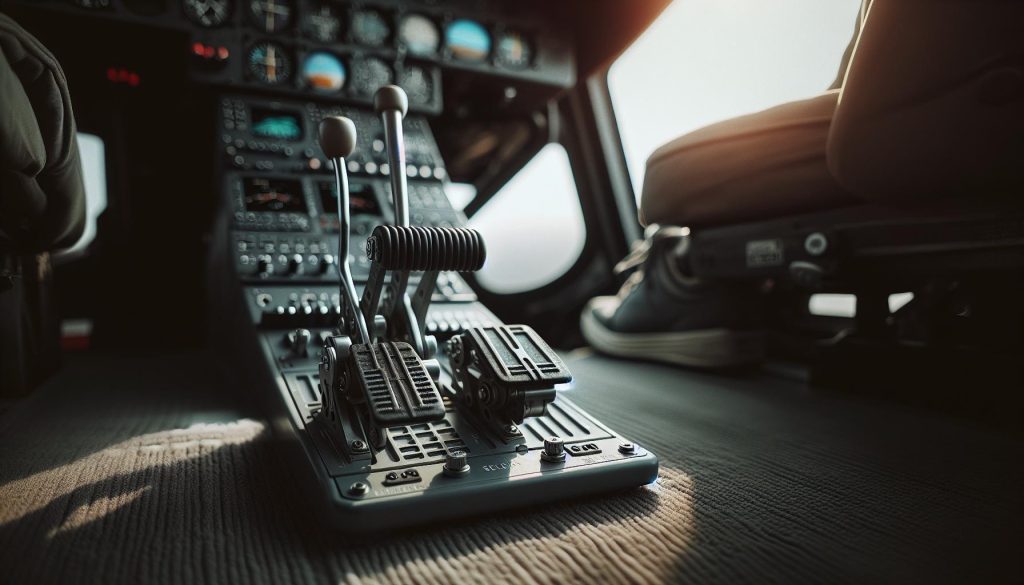
Have you ever wondered if it’s possible to fly a helicopter using just your feet? While it might sound like a fun and quirky idea, helicopter piloting is a complex skill that relies on precise control of various components, including pedals. These pedals, known as anti-torque pedals, play a critical role in managing the helicopter’s yaw and stability. Understanding how these pedals work not only satisfies your curiosity but also demystifies the skillful coordination required in rotary flight. Whether you’re an aspiring pilot or just a helicopter enthusiast, grasping the concept of pedal control is essential. Dive deeper into this topic as we explore how feet can be an integral part of flying a helicopter and enhance your appreciation for the art of aviation.
Can You Fly a Helicopter Using Foot Pedals?
Flying a helicopter with feet alone might seem like a whimsical idea, but in reality, foot pedals play an essential role in controlling a helicopter’s flight. While hands are primarily used for the cyclic control and collective pitch, the foot pedals have a distinct purpose: they control the tail rotor and help manage the helicopter’s yaw, or rotational movement around its vertical axis. This connection is crucial for maintaining stability, especially when maneuvering or compensating for torque produced by the main rotor blades.
When pilots apply pressure to the foot pedals, they adjust the pitch of the tail rotor blades. This action directs the thrust produced by the tail rotor, enabling the helicopter to turn left or right. It’s important to note that while the pedals significantly influence flight, they cannot independently control the helicopter. In practice, pilots use a combination of hand and foot movements to execute coordinated turns or to stabilize the aircraft during flight. Thus, while foot pedals are indispensable in a helicopter’s control system, they cannot be the sole means of operation.
Understanding the effective use of foot pedals requires training and practice, as pilots develop a sense of how their inputs affect the aircraft’s behavior. Each helicopter model may have different pedal sensitivity and responsiveness, necessitating adaptation and familiarity with specific aircraft. Ultimately, the blend of all controls-hands and feet-is what allows for the graceful and precise operation of helicopters in various conditions and scenarios.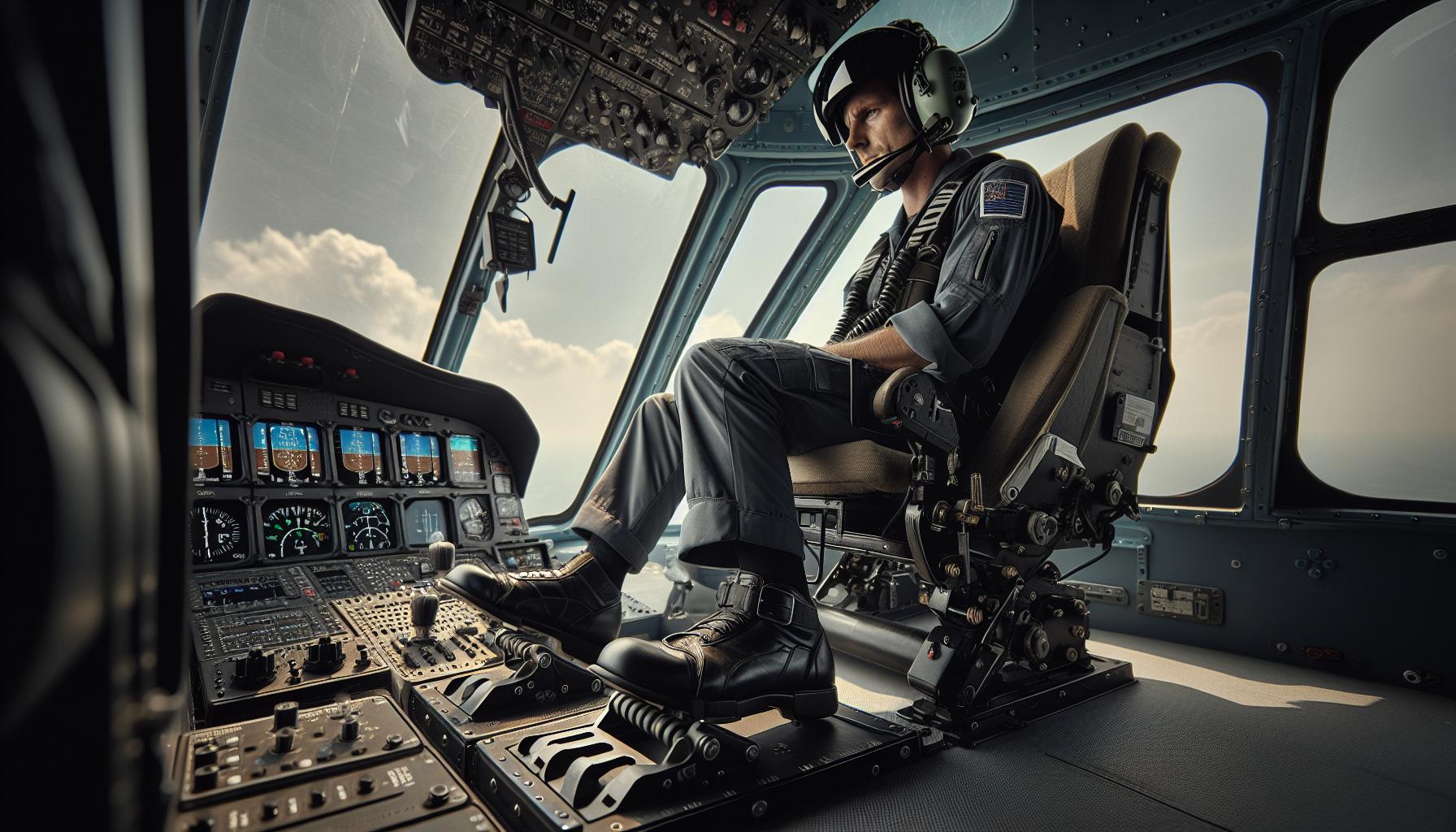
Understanding Helicopter Pedal Control Mechanisms
To truly grasp how helicopters are controlled, it’s essential to understand the mechanics behind the foot pedals, which play a critical role in flight dynamics. Unlike traditional aircraft that primarily rely on ailerons and elevators, helicopters utilize a cyclic, collective, and the distinctive foot pedals to manage their movements and maintain stability. The foot pedals are specifically designed to manipulate the tail rotor-this is not merely a supplementary control but a fundamental mechanism that governs yaw, or the rotation of the helicopter around its vertical axis.
When a pilot presses on a foot pedal, they are directly affecting the pitch of the tail rotor blades. This adjustment alters the thrust generated by the tail rotor, allowing the helicopter to turn left or right. The coordination between foot and hand inputs becomes vital; for instance, when a pilot wants to make a right turn, they typically pull back on the cyclic control to reduce forward speed while simultaneously pressing the right foot pedal to pivot the nose of the helicopter. This combination is crucial because without the balance of forces and directions provided by both foot pedals and the cyclic control, the helicopter could become unstable, leading to potentially dangerous situations.
- Effective Coordination: Mastering foot pedal use requires extensive training. Pilots learn to intuitively understand how their foot movements impact the helicopter’s flight behavior, which varies significantly across different models.
- Model Variability: Each helicopter design features unique pedal sensitivity and responsiveness, meaning pilots must adapt their techniques based on the specific aircraft they’re operating.
- Essential for Safety: Proper use of the foot pedals is not just about maneuverability; it’s also critical for safety, ensuring pilots can counteract unwanted rotations and maintain control in diverse flying conditions.
Ultimately, the foot pedals are indispensable for managing a helicopter’s orientation and stability. As pilots gain experience, they develop a crucial awareness of how to integrate pedal usage seamlessly with other controls. This balance of foot and hand coordination is what allows pilots to maneuver helicopters with precision, enhancing their ability to respond to changing flight situations swiftly. Whether for emergency medical services, law enforcement, or simply enjoying aerial views, understanding these control mechanisms is fundamental to effective helicopter operation.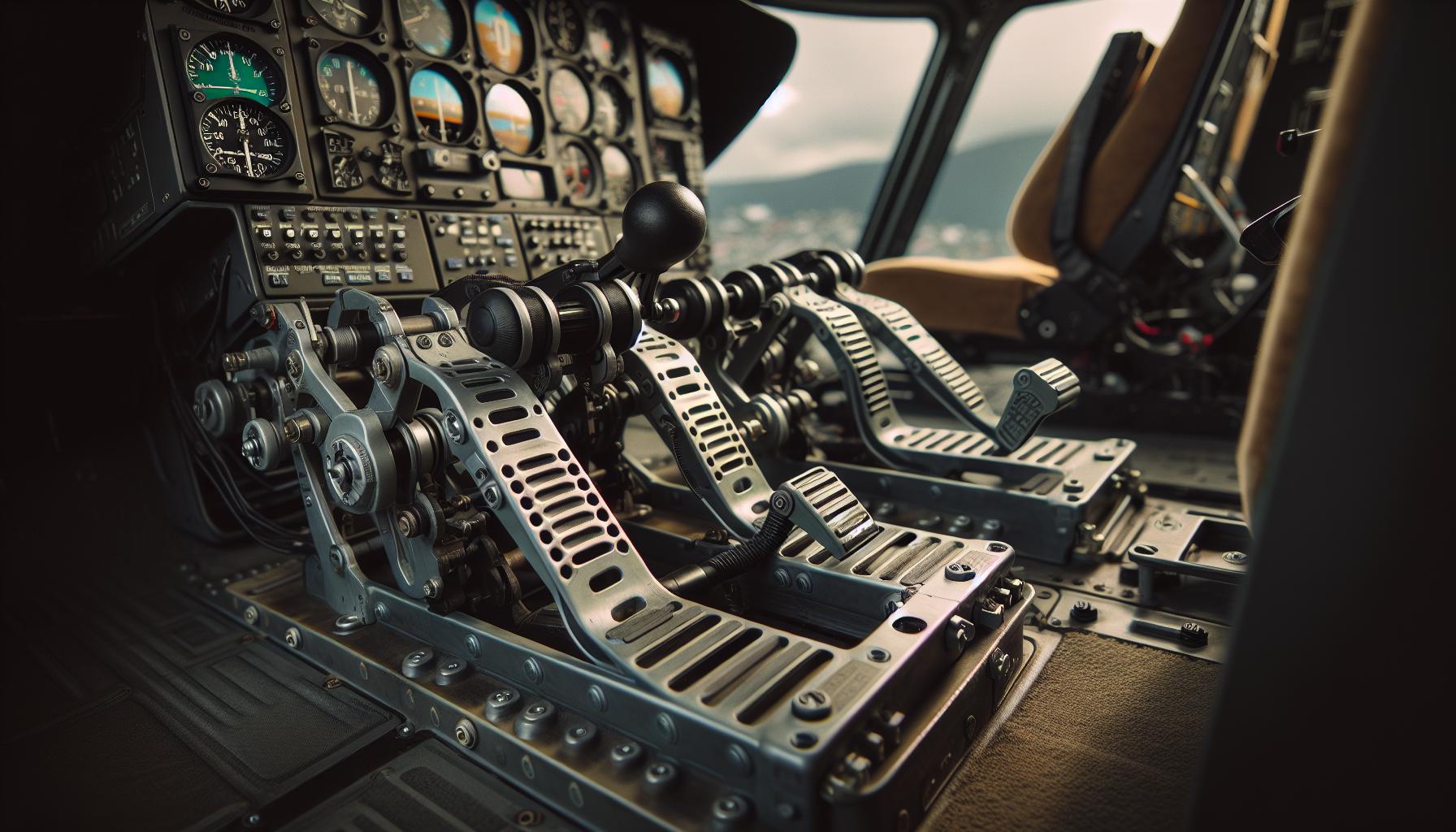
The Role of Foot Controls in Helicopter Flight
To effectively navigate the complexities of helicopter flight, pilots must master the use of foot pedals, which play a vital role in controlling the aircraft’s orientation and stability. Each foot pedal corresponds to the tail rotor, which is essential for managing yaw-the rotation of the helicopter around its vertical axis. When a pilot applies pressure to a pedal, they alter the pitch of the tail rotor blades, influencing the thrust produced. This adjustment allows the helicopter to rotate left or right, enabling precise maneuverability in flight.
The importance of foot controls cannot be overstated; they are as critical as the cyclic and collective controls that manage forward flight and altitude. For example, a right turn requires a coordinated effort: the pilot reduces forward speed by pulling back on the cyclic while simultaneously pressing the right foot pedal. This coordination of hand and foot inputs is crucial for maintaining balance and stability; failing to execute it properly can lead to instability and dangerous situations.
Key Aspects of Foot Control Usage
- Coordination with Other Controls: Mastering the foot pedals enhances overall flight control, as effective coordination between hand and foot movements ensures the helicopter responds predictably to pilot inputs.
- Model-Specific Techniques: Different helicopter models exhibit unique pedal sensitivities, requiring pilots to adapt their techniques to each aircraft’s characteristics. Understanding how each helicopter responds can significantly improve handling proficiency.
- Safety Considerations: Proper foot pedal usage is crucial not just for effective maneuvering but also for safety. Pilots need to counteract unexpected rotations and ensure stability, particularly in challenging flying conditions.
As pilots gain experience, they develop an inherent understanding of how their foot actions influence the helicopter’s flight dynamics, marrying technical skill with instinctive responses. This seamless integration of foot pedal control into regular flight operations is essential in various scenarios, from emergency responses to leisure flights, showcasing the importance and complexity of helicopter piloting.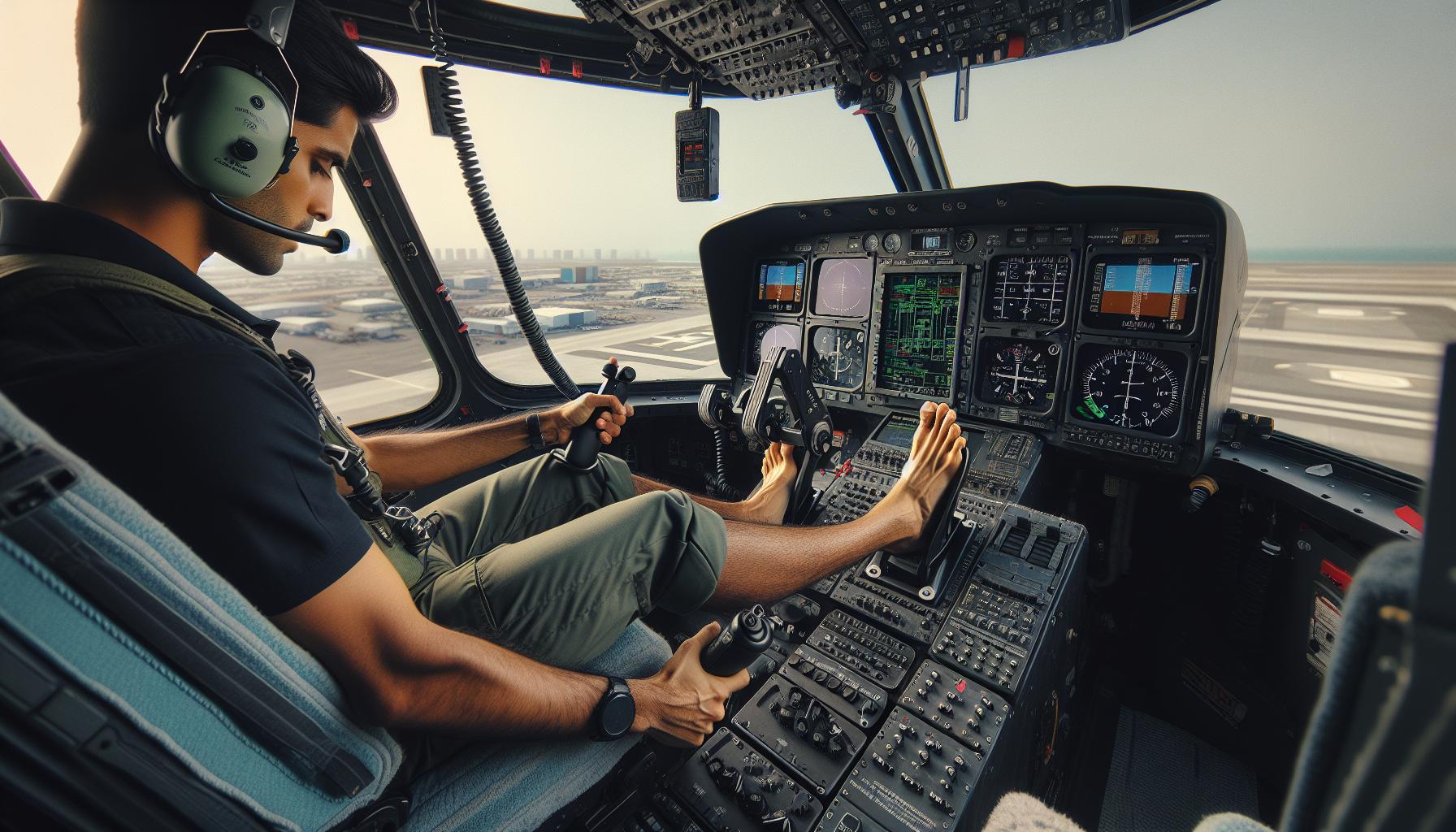
Comparing Helicopter Controls: Hands vs. Feet
The artistry of helicopter flight lies in the intricate dance between hands and feet, each playing a crucial role in controlling the aircraft’s movement. While the cyclic and collective controls are often the most highlighted features of helicopter operation, the foot pedals are equally essential, commanding the tail rotor’s pitch and thereby regulating yaw. This relationship between hand and foot controls reveals a layered complexity in piloting that many often overlook.
Hands primarily manipulate the cyclic and collective, allowing pilots to control altitude and forward movement. The cyclic is pivotal for altering the helicopter’s tilt, thus directing its movement horizontally, while the collective adjusts the rotor blades’ pitch, providing lift. In contrast, foot pedals function in tandem to ensure stability and directional control. For instance, when executing a turn, the pilot must coordinate the inputs from their hands and feet. Pulling back on the cyclic while applying pressure on the appropriate foot pedal not only facilitates the turn but also helps maintain balance, preventing unwanted rotation or loss of control. This synchronization transforms the act of flying into a finely tuned mechanical symphony.
The mechanics of this control are profound yet intuitive; as pilots accumulate experience, they often find their foot movements instinctively aligned with their hand actions. Each helicopter model introduces variances in pedal sensitivity and responsiveness, necessitating a nuanced understanding of how to adapt techniques accordingly. New pilots can find value in practice sessions focused solely on coordinating these controls, emphasizing the importance of mastering each input before attempting to combine them in flight.
Understanding this balance enhances safety and performance, particularly during complex maneuvers or adverse conditions. A well-executed flight depends on the pilot’s ability to seamlessly weave together hand and foot controls, demonstrating that flying a helicopter is not merely about thrust and lift but about artistry in coordination, grounded in rigorous training and experience.
Step-by-Step: Operating Helicopter Pedals
To effectively operate the foot pedals in a helicopter, it’s essential to understand their primary function: controlling the tail rotor, which governs the helicopter’s yaw, allowing it to rotate left or right. This intricate process forms a critical part of how pilots maintain stable and controlled flight. Here’s a step-by-step guide to effectively using these pedals.
1. Familiarize Yourself with the Pedal Layout
Understanding the layout of the pedals is the first step in mastering their use. Each helicopter typically has two pedals, one for each foot:
- Left Pedal: Pressing the left pedal will cause the helicopter to yaw left.
- Right Pedal: Pressing the right pedal will cause the helicopter to yaw right.
Ensure you can operate them comfortably without looking down, as maintaining visual contact with your surroundings is vital during flight.
2. Practice Coordination with Cyclic and Collective Controls
When flying, operating the pedals is not a solitary task; it requires synchronized movement with the cyclic and collective controls. Begin by practicing basic maneuvers:
- Start with a simple hover. As you stabilize the helicopter, gently apply pressure to the pedals to understand their responsiveness.
- Transition to controlled turns. Pull back slightly on the cyclic to maintain altitude while simultaneously applying pressure on the desired pedal to turn.
- Experiment with combinations. For instance, when transitioning from a hover to forward flight, subtly coordinate all three controls for a smooth maneuver.
Recognizing how each input affects the helicopter’s direction will sharpen your instinctive control.
3. Focus on Smooth Inputs
Smooth control inputs are vital for maintaining stability. Abrupt pedal movements can lead to unwanted yaw, potentially resulting in a loss of control. As you practice:
- Make gradual adjustments to ensure the helicopter responds delicately. For example, instead of pressing the pedal fully, try feathering it to find the right amount of pressure needed for subtle adjustments.
- Observe how minor corrections to the pedals can have a pronounced effect on your flight path and overall balance. This practice will enhance your overall pilot finesse.
4. Reinforce with Simulated Practice
Use flight simulators to refine your skills without the pressure of real flight. Many simulators offer realistic pedal control options, allowing you to practice your coordination and responsiveness in various flight scenarios. Focus on scenarios that require rapid and precise pedal adjustments, such as recovering from a yaw while pitching up or down.
By incorporating these steps into your training regimen, you will not only enhance your understanding of pedal operation but also improve your overall flying skills. Mastering foot pedal control is a crucial element in the art of helicopter flying, helping you achieve greater confidence and safety as an aspiring pilot.
How Helicopter Pedal Usage Differs Among Models
The foot pedals in helicopters play a crucial role in the pilot’s ability to control the aircraft, but their design and functionality can vary significantly between different helicopter models. Understanding these differences is key for any aspiring pilot. Most often, helicopters are equipped with two main types of pedal systems: the conventional design and more advanced, integrated systems.
In traditional helicopters, such as the Robinson R22 or Bell 206, the pedals directly manipulate the tail rotor’s pitch. This relationship means that how much and how quickly a pilot presses a pedal can greatly affect the helicopter’s yaw. These models typically require a high level of pedal coordination, as any miscalculation can lead to an unstable flight. For instance, when transitioning from hover to forward flight, pilots must carefully manage the pedal input to maintain heading, which can be particularly challenging in windy conditions.
On the other hand, some modern helicopters, like the Airbus H145 or Bell 429, incorporate advanced flight control systems that provide additional stability and assistive features. These systems can give pilots a bit more leeway by automatically compensating for certain inputs, making it easier to achieve smoother yaw movements and reducing the workload on foot controls. Such systems may also include features that allow pilots to make adjustments through side-mounted stick movements in combination with pedal inputs, which can enhance the overall flying experience.
Training requirements also differ, as helicopters with integrated controls may require specific endorsements or training to understand the nuances of their systems. As a result, it is essential for aspiring pilots to be familiar with the specific model they wish to fly, including the variability in pedal operation. This knowledge not only promotes safety but also enhances the pilot’s confidence in adapting to different helicopter systems, ensuring a solid foundation for their flying career.
Common Myths About Feet and Helicopter Flying
Many aspiring pilots and aviation enthusiasts often grapple with misconceptions about flying helicopters, particularly regarding the use of foot pedals. One common myth is that pilots primarily use their hands for control, relegating foot pedals to a secondary role. In truth, foot pedals are essential for managing the helicopter’s yaw. Without proper use of these controls, maintaining stability and direction during flight can be incredibly challenging. Understanding that foot pedals are not just secondary tools but critical components of flight management is key.
Another prevalent myth is that foot control is simple and intuitive. While it may seem easy to press pedals with one’s feet, effective pedal management requires precise coordination and timing, especially during maneuvers like takeoffs and landings. New pilots often underestimate the amount of practice needed to synchronize their footwork with the cyclic and collective controls. Just as a pianist trains their fingers to play harmoniously, a helicopter pilot must refine their foot-and-hand coordination through dedicated training.
Additionally, some believe that all helicopter pedals function the same way across different models. This is misleading; helicopters can have varied control setups. For instance, older models may have conventional pedal systems that require direct input for tail rotor control, while newer models might feature advanced electronic controls that offer varying degrees of assistance. Each helicopter’s system can differ significantly, necessitating thorough knowledge of the specific aircraft one is piloting.
Lastly, there’s a misconception that foot pedals are less critical when flying at higher altitudes or during cruising speeds. This oversight can be dangerous, as foot pedal input remains vital for maintaining optimal flight conditions. Even at altitude, pilots must continuously adjust for changes in wind direction and speed, which can affect the helicopter’s yaw and overall stability. Dispelling these myths not only equips future pilots with a clearer understanding of helicopter operation but also enhances their safety and effectiveness in the cockpit.
Exploring Alternatives: Hands-On Maneuvering Techniques
Flying a helicopter effectively is as much about mastery of the hands as it is about the feet. While foot pedals are crucial for controlling yaw and maintaining directional stability, there are several hands-on maneuvers that can enhance a pilot’s overall control and effectiveness. By integrating these techniques, pilots can harness the full potential of their aircraft, ensuring smoother flights and better handling in various situations.
One effective alternative to relying solely on foot pedals is the use of coordinated cyclic and collective inputs. The cyclic control affects the lift on the rotor blades, allowing a pilot to maneuver the helicopter laterally or forward and backward. When paired with the collective, which adjusts the overall lift by changing the pitch of the rotor blades, a pilot can achieve a harmonious balance that minimizes the need for excessive pedal input. This method is particularly useful during complex maneuvers such as turns or when navigating around obstacles.
Practice Makes Perfect
Pilots should seek to practice these techniques in various conditions. For example, flight simulators provide an excellent platform to develop muscle memory without the pressures of real-world flying. Simulators often allow for adjustments in wind conditions, allowing pilots to experience the effects of crosswinds or gusts on their control inputs. This virtual practice can bolster confidence when transitioning to actual flights.
Another practical approach is focusing on visual cues. Experienced pilots develop an ability to read the helicopter’s response to changes in collective and cyclic inputs before needing to make foot adjustments. By keeping an eye on the horizon and maintaining situational awareness through consistent scanning, pilots can anticipate when to make pedal inputs rather than reacting to them, thereby improving responsiveness and reducing workload.
Instructors often emphasize the importance of maintaining a balanced flight attitude, regardless of the specific inputs being used. This balance not only enhances control but also fosters a smoother flying experience. By grounding these techniques in consistent practice and situational awareness, pilots can become adept at flying their helicopters with a blend of foot and hand maneuvers, ultimately leading to a safer and more enjoyable experience in the skies.
Training Requirements for Foot-Controlled Helicopter Operation
Training to operate a helicopter with precise foot control is essential for any aspiring pilot. While mastering the cyclic and collective controls is critical, foot pedals play a pivotal role in managing yaw and stabilizing flight direction. Understanding the specific training requirements to effectively use these controls can enhance a pilot’s overall flying capability and safety.
To start, prospective helicopter pilots typically undergo formal training that includes both ground school and flight instruction. Ground school covers fundamental aerodynamics, helicopter systems, and the principles of flight; it’s here that students learn the roles and functions of all controls, including the foot pedals. Flight training, often conducted with certified instructors, allows students to practice the integration of hand and foot controls in real-time. Hands-on experience helps develop muscle memory, making the coordinated use of pedals more intuitive.
During flight lessons, instructors emphasize the importance of foot control in various maneuvers. For example, during hover and landing, precise footwork is crucial to maintain stability and control. As students progress, they learn to anticipate the need for pedal inputs based on the helicopter’s response to changes in throttle, speed, and environmental factors like wind. Simulation training can also be beneficial; using flight simulators, pilots can practice scenarios that challenge their foot control skills without the risks associated with actual flight.
Moreover, building muscle control through physical fitness can enhance a pilot’s pedal proficiency. Exercises targeting leg and core strength improve the ability to operate pedals effectively and respond more swiftly during emergencies. Overall, thorough training, consistent practice, and physical preparedness are key components in becoming adept at using foot controls, ensuring that pilots can handle their helicopters confidently and safely.
Real Stories: Pilots Share Their Foot Control Experiences
Every helicopter pilot has a unique journey that shapes their flying experience, especially when it comes to mastering the ever-important foot controls. For many, these pedals are not just an added feature; they are essential in managing the helicopter’s yaw and maintaining stability during flight. Pilot stories often reveal the pivotal moments that defined their understanding and coordination of foot controls.
One pilot recalls his first solo flight, a day filled with excitement and anxiety. As he lifted off, he found that keeping the helicopter stable required constant and precise pedal adjustments. “It felt like dancing with the machine,” he explained. “As soon as I let my foot relax, the helicopter began to drift. I had to remember that every little movement counted.” His experience underlined the importance of muscle memory in utilizing the pedals effectively, which is honed through thorough training and practice.
Another pilot shared a challenging moment during a rescue operation. Dealing with strong crosswinds, every input of the foot pedals became a decisive factor. “I had to react quickly,” she recalled. “One moment of hesitation could mean losing control. It was a real test of my training and instincts. The pedals became an extension of my body; I was no longer thinking about them, but feeling how much pressure to apply.” This perspective emphasizes that real-world flying often demands intuitive pedal use, where the pressure becomes second nature through experience.
Moreover, stories often highlight how foot control mastery can directly affect safety. A seasoned instructor noted that many new pilots underestimate the significance of the pedals during critical phases, such as takeoff and landing. “I always remind my students that ignoring the pedals can lead to disaster. Effective communication between foot controls and hand movements defines the safety of each flight.” This insight serves as a reminder that diligent training on all controls, including foot pedals, is essential for aspiring pilots.
In summary, these narratives not only inspire those interested in helicopter flying but also serve as practical reminders of the complexities involved. The journey towards mastering foot pedal usage is one of the many facets that make helicopter flying both challenging and exhilarating. For anyone drawn to the skies, these stories are a testament to the skill, dedication, and adaptability required to pilot a helicopter successfully.
The Future of Helicopter Control Technologies
The evolving landscape of helicopter control technologies promises to reshape how pilots interact with their machines, potentially making flight safer and more intuitive. One of the most exciting advancements is the integration of fly-by-wire systems. These digital controls replace traditional mechanical linkages with electronic signals, allowing for greater precision in controlling helicopter movements, including yaw adjustments made through the foot pedals. With these systems, helicopters can be equipped with sophisticated algorithms that smooth out inputs and help pilots maintain stability, thus reducing the cognitive load during critical maneuvers.
In addition to fly-by-wire technology, the introduction of augmented reality (AR) displays in the cockpit may revolutionize pilot training and flight operations. AR can overlay critical data directly onto the pilot’s field of vision, helping them better understand the dynamics of foot pedal use in various flight scenarios. For instance, while learning, a pilot might see visual cues indicating when to apply pedal inputs during turns or amid changing wind conditions, effectively bridging the gap between theory and practice.
Moreover, advancements in simulation technologies are making it easier for aspiring pilots to master the complex coordination between hands and feet. High-fidelity simulators can replicate the tactile feel of foot pedals, allowing trainees to practice their responses in a safe, controlled environment. This can lead to improved muscle memory, as aspiring pilots can repeatedly refine their skills without the pressures of real-world flying.
As we look to the future, the potential for artificial intelligence (AI) to assist with flight operations is another area to explore. Imagine a system that can learn from a pilot’s habits and provide feedback or adjustments in real-time, helping them optimize their control inputs for better performance and safety. Such innovations not only promise to enhance pilot proficiency but also contribute to a culture of continuous learning and adaptation in helicopter aviation.
In summary, is set to enhance safety and pilot accessibility through digital systems, AR training aids, advanced simulation, and AI. These developments not only promise to make flying more engaging and less daunting for new pilots but also ensure that experienced aviators can continue to evolve and adapt to the changing demands of aviation.
Engaging with Helicopter Controls: Tips for Enthusiasts
Flying a helicopter might seem like a daunting task, especially with the intricate coordination between hands and feet during maneuvers. However, for enthusiasts eager to engage with helicopter controls, understanding the foot pedals – the key components for yaw control – is crucial. These pedals manage the helicopter’s tail rotor, which influences its direction. Learning to balance pedal inputs with collective and cyclic controls is essential for smooth and effective flying.
To practice engaging with helicopter controls at home, consider using a flight simulator. Modern simulators allow users to experience realistic pedal dynamics without the environmental pressures of actual flight. This method is not only fun but also helps build the muscle memory needed for precise movements. If you have access to a full-motion simulator, take advantage of it to experience the nuances of helicopter control more vividly.
For those aspiring to fly, developing a solid understanding of foot control mechanics will serve you well. Start with ground lessons that cover the basics of helicopter dynamics, including how different control inputs affect flight behavior. Emphasize learning the relationship between your pedals and the helicopter’s yaw; a common beginner mistake is overusing or underutilizing the pedals, leading to uncoordinated flight.
Lastly, connect with local flying clubs or online forums to share experiences and tips with other enthusiasts. Engaging with a community of helicopter lovers can provide insights into the nuances of pedal control, anecdotes from experienced pilots, and recommendations for further learning opportunities. This collaborative approach will not only enhance your knowledge but also fuel your passion for aviation.
Faq
Q: Can helicopter pilots rely solely on foot pedals to control flight?
A: No, helicopter pilots cannot rely solely on foot pedals. While foot pedals are crucial for controlling the tail rotor and adjusting yaw, they work in tandem with cyclic and collective controls operated by hands. Effective flight requires coordination of all controls for stability and maneuverability.
Q: What happens if a helicopter pilot uses only feet for control?
A: Using only feet for control can compromise flight safety. Helicopter operation demands precise adjustments across all controls, including cyclic and collective. Neglecting hand controls can lead to loss of control, unstable flight, or crashes.
Q: Do all helicopters use foot pedals the same way?
A: Not all helicopters use foot pedals the same way. While most use foot pedals to control the tail rotor, specific models may vary in pedal sensitivity and function. Pilots should understand their helicopter’s unique controls as detailed in the “How Helicopter Pedal Usage Differs Among Models” section of the article.
Q: How do foot pedals affect helicopter stability?
A: Foot pedals significantly affect helicopter stability. They manage yaw, helping to maintain a straight flight path. Proper use ensures coordinated turns and stable hovering. Mastering pedal control is essential, as discussed in the “Step-by-Step: Operating Helicopter Pedals” section.
Q: What are common misconceptions about using feet in helicopter flying?
A: Common misconceptions include the idea that feet can operate a helicopter alone. In reality, effective flying requires full-body coordination. Details on these myths are thoroughly explained in the “Common Myths About Feet and Helicopter Flying” section.
Q: Are there any new technologies in helicopter controls that reduce the need for foot pedals?
A: Yes, advancements are being made in helicopter control technologies. Some modern systems use fly-by-wire mechanisms, which can lessen reliance on traditional foot pedals. Insights into these developments are covered in the “The Future of Helicopter Control Technologies” section.
Q: How can new pilots practice foot control effectively?
A: New pilots can practice foot control effectively by using flight simulators and during training flights. Instructors can provide tailored exercises focusing on engaging pedals while coordinating with other controls. These training requirements are highlighted in the “Training Requirements for Foot-Controlled Helicopter Operation” section.
Q: Is it possible to fly a helicopter with one foot, and how?
A: While it’s technically possible to operate a helicopter using one foot, it’s not advisable. Pilots may momentarily use one foot for specific maneuvers, but reliance on one foot can impair control and safety. Always focus on using both feet for balanced operation to ensure effective control, as discussed in the article sections.
To Conclude
Flying a helicopter with your feet might sound unusual, but understanding the vital role of pedal controls can empower aspiring pilots and aviation enthusiasts alike. As we’ve explored, proper pedal manipulation is crucial for maintaining balance and control during flight. Don’t let curiosity stop here! Dive deeper into the world of helicopters by checking out our articles on the different types of helicopters and how they work.
If you’re ready to take your aviation knowledge to new heights, consider subscribing to our newsletter for the latest insights, expert tips, and exclusive resources. Got questions or opinions? We love hearing from our readers! Share your thoughts in the comments or on social media. By exploring the fascinating mechanics of aviation, you open doors to countless opportunities-whether it’s a new hobby, career, or simply a deeper appreciation for flight. Your journey into the skies starts with knowledge, so let’s keep soaring together!
Get our latest guides, news, and insights highlighted in your Google Search & AI Overviews.