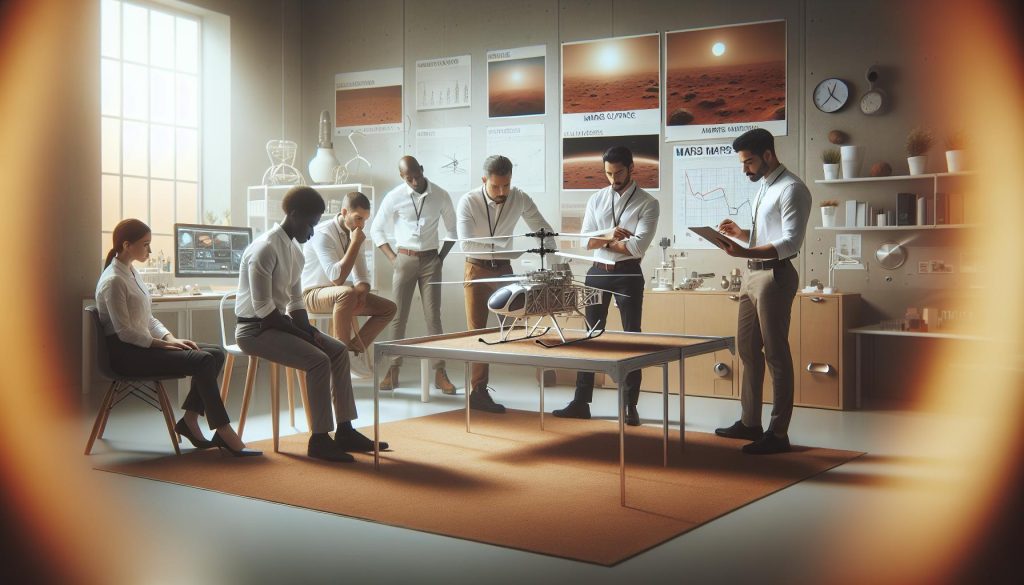
Imagine soaring above the rust-red landscapes of Mars in a helicopter designed to defy the impossible. NASA’s Ingenuity Mars Helicopter has accomplished what many thought was unattainable: powered, controlled flight on another planet. Since its first flight in April 2021, Ingenuity has completed an astounding 72 flights, transforming our understanding of aerial exploration in extraterrestrial environments.
As we delve into the fascinating engineering behind this remarkable craft, you’ll discover how Ingenuity overcame the challenges of Mars’ thin atmosphere, the significance of its successful missions, and the innovative technologies that made it possible. This exploration not only sparks curiosity about the universe but also ignites hope for future missions, showcasing how engineering ingenuity can push the boundaries of human achievement. Join us on this journey to uncover the secrets of how helicopters like Ingenuity work on Mars and what it means for the future of space exploration.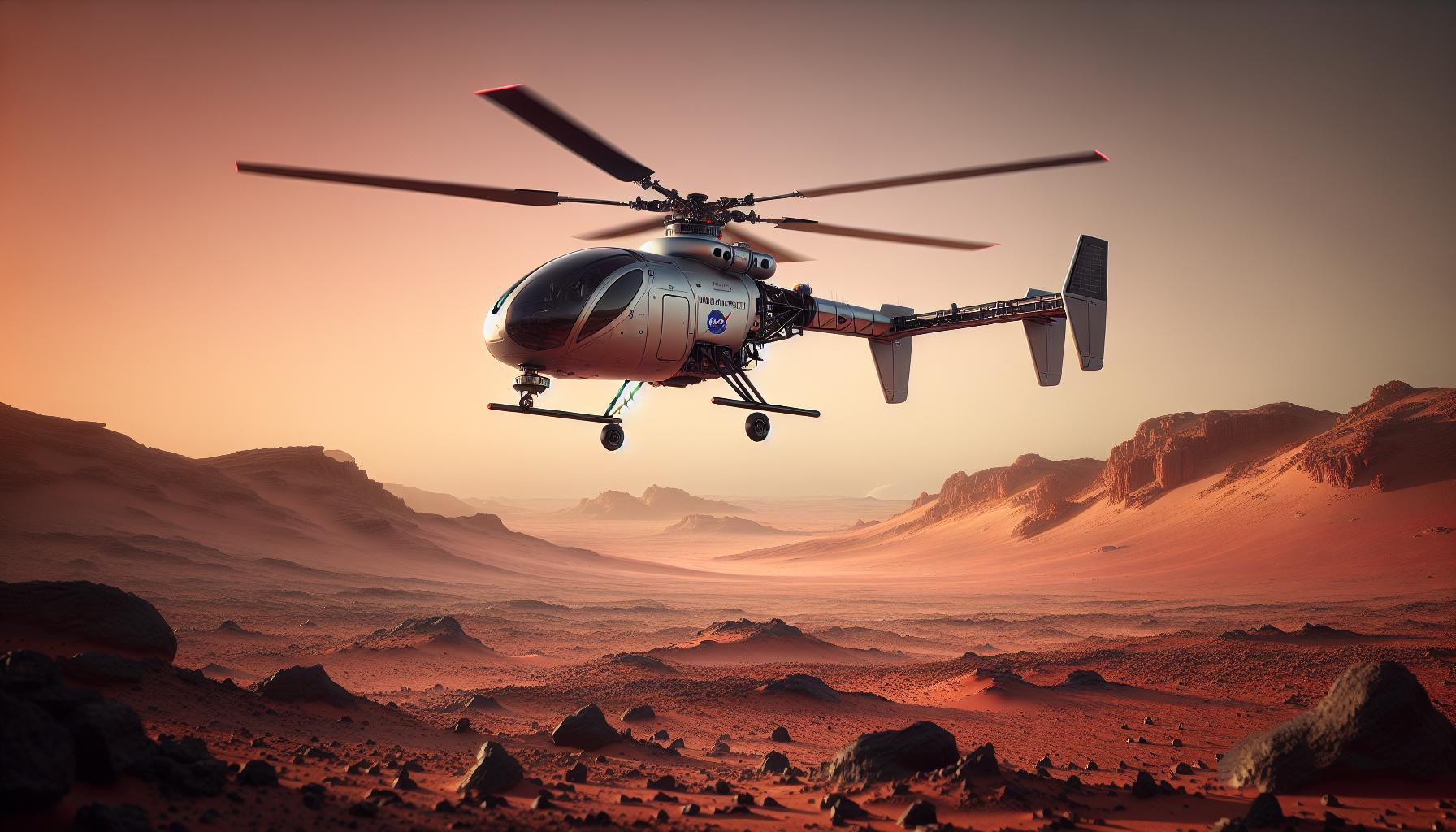
How Helicopters Work on Mars: An Overview
Imagine a helicopter flying over the rugged, dusty surface of Mars-this is not science fiction but reality brought about by NASA’s Ingenuity helicopter. Launched as a technology demonstration accompanying the Perseverance rover, Ingenuity achieved the remarkable feat of powered flight in the thin Martian atmosphere starting April 19, 2021. Its mission challenged the limits of technology and engineering, proving that controlled flight is indeed possible on another planet.
When it comes to flying on Mars, the principles of aerodynamics must adapt significantly due to the planet’s unique conditions. With an atmospheric density less than 1% of Earth’s, Ingenuity features specialized rotor blades that spin at an impressive rate, approximately 2,500 rotations per minute. Each flight is meticulously planned-pilots back on Earth send commands that the helicopter autonomously executes, navigating using onboard sensors and cameras. This intricate balance of technology means that each flight not only surveys the Martian terrain but also collects invaluable data for future missions.
In addition to engineering marvels, Ingenuity’s success emphasizes the role helicopters can play in exploring other celestial bodies. Aspects like terrain mapping and scouting for future rover pathways become less daunting with aerial assistance. The adaptability of such technologies raises an exciting prospect: as we learn how helicopters operate in Mars’ atmosphere, we can dream beyond the Red Planet, envisioning new explorations and discoveries in the greater cosmos. Every lift-off and landing not only enriches our understanding of Mars but also inspires innovations destined for Earth and beyond.
The Design and Engineering of Ingenuity
The Ingenuity helicopter is an extraordinary feat of engineering, specifically designed to navigate the unique challenges of Mars’ atmosphere. With its first successful flight on April 19, 2021, Ingenuity marked a milestone in aerospace innovation, being the first aircraft to achieve powered flight on another planet. Its design emerged from the necessity to function in an environment where the atmosphere is less than 1% as dense as Earth’s. This required a rethinking of traditional helicopter design principles, resulting in features that would enable it to remain airborne on the Red Planet.
The rotor system of Ingenuity is particularly noteworthy. It features two counter-rotating blades that measure about 1.2 meters in length, spinning at approximately 2,500 revolutions per minute. This high RPM is critical for generating sufficient lift under Mars’ thin atmosphere. Additionally, the materials used in Ingenuity’s construction are lightweight yet robust, allowing the helicopter to withstand the cold Martian nights and potential dust storms. The overall weight of Ingenuity is around 680 grams on Mars, but it would weigh about 1,800 grams on Earth, showcasing the importance of careful engineering and material selection for extraterrestrial applications.
Powering the helicopter is a lithium-ion battery, charged by solar panels mounted on its body. This self-sustaining energy system is essential for its operations, especially considering that temperatures can drop significantly at night, risking battery performance. Onboard sensors and cameras allow Ingenuity to navigate the challenging Martian terrain autonomously. Each flight is carefully planned by ground control, but once airborne, it executes its programmed maneuvers, capturing crucial data that help inform future rover missions and scientific inquiries.
Through its innovative design and engineering, Ingenuity not only exemplifies the potential for aerial exploration on Mars but also sets the stage for advancing aerospace technology. The lessons learned from its operations will likely inspire the next generation of aerial vehicles, enhancing our understanding of other planets and expanding the frontiers of space exploration.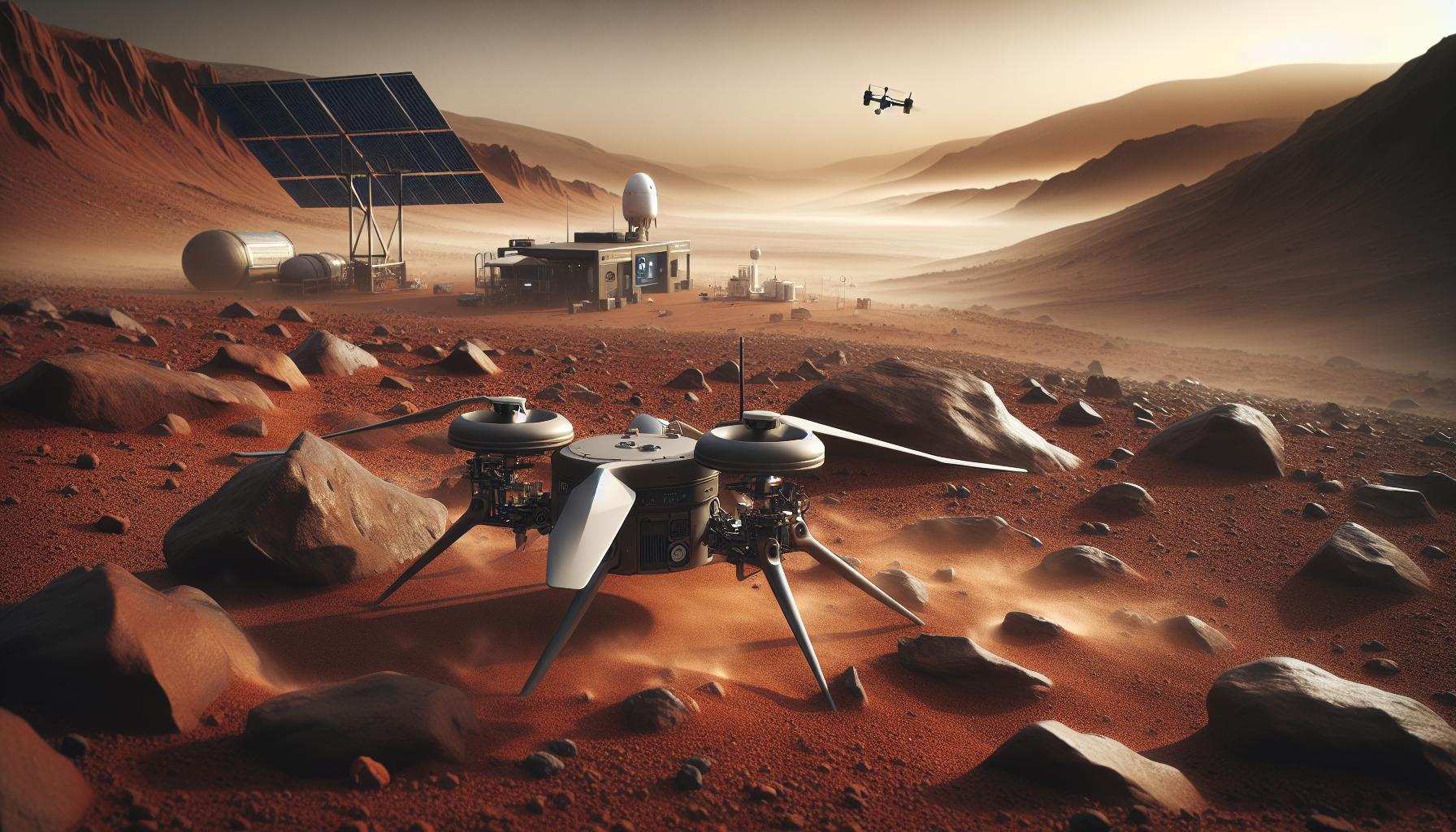
Key Challenges of Flying on Mars
Flying a helicopter on Mars presents extraordinary challenges that fundamentally differ from those faced on Earth. The most pressing issue is the Martian atmosphere, which is a mere 1% as dense as that of Earth. This sparse air significantly reduces the amount of lift generated by the rotors. To compensate, the rotor blades of Ingenuity spin at astonishing speeds-approximately 2,500 revolutions per minute-allowing the helicopter to produce enough lift to become airborne. This unique requirement leads engineers to create rotor designs that diverge from conventional helicopter models.
Moreover, temperature fluctuations on Mars pose another critical hurdle. The helicopter operates in an environment where temperatures can plunge to minus 130 degrees Fahrenheit, particularly at night. Such extreme conditions can threaten the performance of onboard electronic components and batteries. To tackle this, Ingenuity is equipped with heaters for its battery, while solar panels generate power during the day, ensuring that the helicopter remains operational even in the most inhospitable climates.
Another challenge lies in the navigation and control of the helicopter. On Mars, the communication delay with Earth can range from 4 to 24 minutes, requiring Ingenuity to operate autonomously during flights. This autonomy is crucial for real-time decision-making, especially when navigating rugged terrains that may not be mapped or visible from the ground. Onboard sensors and cameras are essential for the helicopter to detect obstacles and adjust its flight path accordingly.
These technical challenges highlight the ingenuity (pun intended) behind aerospace engineering for Mars exploration. Each successful flight not only proves Ingenuity’s capabilities but also provides invaluable data that will influence future missions, enabling more advanced aerial vehicles to explore the Red Planet’s diverse landscapes and push the boundaries of what we understand about our neighboring worlds.
Unique Technologies for Mars Helicopters
Flying a helicopter on Mars is a remarkable feat of engineering that leverages unique technologies specifically designed to address the extreme conditions on the Red Planet. One of the most impressive innovations found in NASA’s Ingenuity helicopter is its lightweight design, essential for flying in an atmosphere that’s just 1% as dense as Earth’s. To achieve lift in such sparse air, the rotor blades have been uniquely crafted. They are longer and constructed from ultra-light materials, allowing them to rotate at high speeds-approximately 2,500 revolutions per minute-thus generating enough lift to ascend.
Another groundbreaking technology is the autonomous navigation system. On Mars, the time delay for signals to travel to and from Earth can range from 4 to 24 minutes. This communication gap means that real-time control is not feasible; hence, Ingenuity is equipped with advanced onboard sensors and imaging systems. These allow the helicopter to make instantaneous decisions based on its surroundings. The stereo camera system captures terrain data, which is processed to help the helicopter avoid obstacles and navigate complex landscapes efficiently.
Additionally, Ingenuity utilizes solar power supported by sophisticated thermal systems. With temperatures dropping as low as -130°F at night, it is critical that the helicopter remains operational. Solar panels recharge the onboard batteries during the day, while built-in heaters prevent the battery from freezing overnight. This integration ensures the helicopter can endure the extreme Martian environment while continuously gathering data and performing flight tests.
These innovative technologies do not merely make the flights possible; they represent a significant leap forward for aerial exploration. Each successful flight of Ingenuity offers valuable insights that could inform the design of future aerial vehicles aimed at exploring not only Mars but potentially other celestial bodies as well. The advances in materials, automation, and energy management showcase the incredible potential of aerospace engineering in overcoming the challenges of space exploration.
Comparative Analysis: Earth vs. Mars Helicopter Flight
Flying a helicopter in the thin Martian atmosphere is a challenge that defies conventional aviation principles. On Earth, helicopters rely on a relatively thick atmosphere to generate lift and maneuver. In contrast, Mars presents an entirely different scenario; its atmosphere is just 1% the density of Earth’s, making every aspect of helicopter design and operation critical. NASA’s Ingenuity helicopter successfully adapted to these extremes, showcasing innovative engineering that highlights the stark differences between flying on our planet and the Red Planet.
Key Differences in Flight Mechanics
The mechanics of flight on Mars necessitate significant alterations in rotor design and performance. On Earth, helicopters typically operate with rotor blades that span about 30 to 50 feet in diameter. In contrast, Ingenuity’s rotor blades are much longer and lighter, tailored for higher rotational speeds-around 2,500 revolutions per minute. This adaptation not only optimizes lift generation but also compensates for the lack of air density. To emphasize, while Earth’s helicopters can function effectively under varied weather conditions, Ingenuity must contend with a consistent atmospheric barrier that impacts aerodynamics and energy efficiency.
- Lift Generation: Earth: Achieved with robust rotor designs; Mars: Requires extremely fast-lifting modifications.
- Materials: Earth: Heavier materials can be used; Mars: Weight-saving designs are essential for survival and efficiency.
- Control Systems: Earth: Pilots can react instantly; Mars: Autonomous systems navigate the helicopter due to communication delays of up to 24 minutes.
Energy Management and System Autonomy
Energy management presents another area of divergence. On Earth, helicopters can land, refuel, and recharge with relative ease. Ingenuity, however, relies on solar power to operate its onboard systems. The Martian nights can plunge temperatures to a frigid -130°F, making it essential for the helicopter to utilize solar panels for day-time charging, coupled with thermal management systems to prevent battery freezing. The operational strategy on Mars emphasizes sustainability and resilience, akin to how resource management in aviation can significantly prolong a helicopter’s service life on Earth.
In essence, the mission of Ingenuity illustrates that successful flight on Mars is not merely about supplementary technology but a holistic approach that reimagines helicopter flight. The lessons learned from this pioneering endeavor offer a blueprint for future aerial exploration, not just on Mars but potentially in explorations beyond our own solar system. Ingenuity’s adaptability continues to inspire innovation, hinting at the endless possibilities nestled within aerospace engineering.
The Role of Atmosphere in Helicopter Performance
The Martian atmosphere presents a formidable challenge for helicopter performance, distinguished by its extreme thinness-merely 1% of Earth’s atmospheric density. This stark difference dramatically affects how helicopters like Ingenuity are designed and operated. In order to generate enough lift to take off and maneuver, Ingenuity must utilize longer and lighter rotor blades capable of spinning at exceptionally high speeds, around 2,500 revolutions per minute. This adaptation is crucial, as the low atmospheric pressure necessitates alterations in rotor dynamics that conventional helicopters on Earth do not face.
- Lift Mechanics: While helicopters on Earth rely on robust rotor designs to create lift, Ingenuity’s engineers had to innovate to enable effective vertical takeoff. The lightweight, elongated rotor blades enhance lift generation in a setting where every bit of atmospheric interaction is critical.
- Energy Efficiency: The thin atmosphere also impacts energy consumption. Ingenuity’s flights are designed to be efficient, as it leverages brief windows of sunlight to recharge its solar batteries on the sunlit Martian surface.
- Control and Stability: The helicopter must continuously adjust its flight controls autonomously. On Earth, pilots can respond to changes in air pressure and wind conditions instantly, but on Mars, communication delays of up to 24 minutes mean that pre-programmed flight paths are essential, emphasizing the need for advanced onboard navigation systems.
One visible effect of the atmospheric conditions on Mars is how they influence the helicopter’s stability and responsiveness. Ingenuity must contend with fluctuations that can happen more rapidly than operators can react, requiring it to be equipped with sophisticated algorithms to maintain stable flight in an unpredictable environment. This adaptation to the atmosphere not only demonstrates Ingenuity’s remarkable engineering but also highlights the innovation required for future aerial explorations beyond Earth.
Understanding the role of the Martian atmosphere in helicopter performance is vital for future missions. Ingenuity’s success provides crucial insights into designing aerial vehicles suitable for extraterrestrial environments, paving the way for more complex explorations of Mars and potentially other celestial bodies where similar atmospheric challenges exist.
Navigating Martian Terrain: How Ingenuity Adapts
Ingenuity’s ability to navigate the rugged Martian terrain showcases extraordinary engineering and advanced technology. The helicopter is equipped with sophisticated sensors and onboard intelligence that allow it to autonomously traverse the planet’s varied landscape, adapting to its unpredictable challenges. This capability is vital when considering that each flight is a high-stakes mission within a remote environment where real-time human intervention is impossible due to significant communication delays.
One of Ingenuity’s remarkable adaptations is its use of a specialized navigation system that combines data from various sensors, such as the Inertial Measurement Unit (IMU) and an onboard camera. This system helps the helicopter identify landmarks and track its position accurately, ensuring it can navigate without reliance on signals from Earth. Ingenuity employs a technique called “visual odometry” to map the ground below and adjust its flight path accordingly. This allows it to respond to obstacles, land smoothly, and even alter its course in real-time during flights, a feature essential for safely navigating the Martian landscape filled with rugged cliffs and hidden pits.
The helicopter’s lightweight design further enhances its ability to adapt. It is crafted from advanced composite materials contributing to its low weight while maintaining structural integrity. This enables Ingenuity to execute maneuvers, such as rapid ascents and descents, that would be challenging for heavier vehicles. Additionally, its rotor blades have been engineered to be more aerodynamic than traditional helicopter designs, essential for achieving lift in the thin atmosphere of Mars.
As Ingenuity continues to explore the Martian terrain, it sets a precedent for future aerial vehicles. The lessons learned from its navigational capabilities can guide the development of more sophisticated drones that may one day investigate distant worlds. This technology not only promotes scientific discovery but also inspires innovation in aviation engineering on Earth, paving the way for exciting advancements in unmanned aerial vehicles (UAVs) and other applications.
Flight Tests and Success Stories on Mars
Ingenuity’s journey on Mars has been nothing short of groundbreaking, marking the dawn of aerial exploration in extraterrestrial environments. The helicopter’s flight tests have provided invaluable data, unveiling insights into how a rotorcraft functions under Martian conditions. From its inaugural flight on April 19, 2021, which ascended to an altitude of just 10 feet (3 meters), to its most recent achievement of 66 feet (20 meters) during its 59th flight on September 16, 2023, each successful aerial operation has pushed the envelope for what is possible in planetary exploration.
Throughout its mission, Ingenuity has completed an impressive total of 72 flights, far exceeding its initial goal of five flights. This extensive flight testing has allowed NASA to refine the technology and strategies necessary for future aerial missions. For instance, during one of its flights, Ingenuity adeptly hovered at different altitudes to study Martian wind patterns-a crucial data point for understanding atmospheric behavior on Mars and for designing future aircraft capable of similar explorations.
The helicopter’s success stories highlight not only the engineering prowess behind its design but also the adaptability required to navigate the unique challenges posed by Mars. Each flight is meticulously planned, taking into account the planet’s thin atmosphere and varying terrain. The ability to autonomously adjust during flight based on real-time data allows Ingenuity to effectively survey regions that would be difficult or impossible for rovers to access.
As we look to the future, the success of Ingenuity serves as a catalyst for new ideas in aerial exploration. The lessons learned from its high-stakes flights can inform the design of next-generation Martian drones, providing a glimpse into an exciting era where access to the aerial perspective on other planets could become routine. Sharing these achievements not only captures the imagination of aspiring engineers and pilots but also inspires future innovations that extend beyond space exploration, affecting terrestrial drone technologies and broader aerospace projects.
Future of Aerial Exploration on Mars
The recent triumphs of the Ingenuity helicopter on Mars have not only paved the way for aerial exploration on the Red Planet but have also sparked a vibrant vision for future innovations in extraterrestrial aviation. As we reflect on Ingenuity’s achievements, which include over 70 successful flights, we can anticipate a transformative era for planetary exploration, underpinned by the insights gained from this pioneering mission.
The prospect of deploying advanced aerial vehicles to explore Martian landscapes introduces numerous possibilities. Future helicopter designs could feature enhanced flight capabilities, greater autonomy, and sophisticated sensors for navigating and analyzing complex terrains. These advancements might include:
- Increased Payload Capacity: Future helicopters could carry specialized instruments, allowing them to conduct geological surveys, atmospheric studies, or even sample collections from hard-to-reach areas.
- Improved Navigation Systems: Leveraging technologies such as computer vision and machine learning, upcoming aerial vehicles could operate with minimal ground control input, navigating autonomously through varied Martian landscapes.
- Longer Flight Durations: Innovations in energy efficiency and power storage could enable helicopters to fly longer distances, enhancing their scope of exploration.
The unique Martian atmosphere presents its own set of challenges, but the successes so far signify that flying on Mars is not just feasible-it is a promising frontier. The next generation of aerial exploration vehicles may include advanced rotorcraft that can adapt to fluctuating wind conditions and atmospheric changes, providing vital data for future missions, such as human landings. Moreover, these innovations are expected to influence drone technology back on Earth, highlighting the importance of space exploration as a catalyst for developments in aviation and robotics.
As enthusiasts and aspiring engineers observe the unfolding saga of Martian exploration, the future of aerial robotics offers a blend of excitement and opportunity. Structuring educational pathways focused on these emerging technologies will prepare the next generation of explorers, engineers, and researchers for careers that may shape our understanding of not just Mars, but other celestial bodies as well. The successes of Ingenuity serve as a beacon, illuminating the path forward for aerial exploration, where human imagination and engineering prowess combine to expand the horizons of discovery.
Impact on Mars Missions and Scientific Discoveries
The successful deployment of the Ingenuity helicopter on Mars has reshaped our understanding of aerial exploration, opening new avenues for scientific discovery and enhancing the capabilities of future missions. Since its initial flights, Ingenuity has demonstrated the potential for helicopters to collect critical data from previously inaccessible regions, thus redefining the way we approach planetary investigations.
One significant impact of Ingenuity’s operations is its role in scouting locations for the Perseverance rover, enabling better-targeted exploration of Martian terrain. By flying over potential sites, Ingenuity can identify geological features of interest, such as sedimentary rocks or signs of ancient riverbeds, that offer clues to Mars’ watery past. This capability not only streamlines mission objectives but also maximizes the scientific return by ensuring that the rover focuses on the most promising areas for investigation.
Furthermore, Ingenuity’s adaptability has led to insights regarding Martian weather patterns and atmospheric conditions. Observations from its flights contribute to understanding how thin air and variable winds affect rotorcraft performance, enriching our knowledge of Martian environmental dynamics. This data will be invaluable for future missions aiming for human exploration, as it aids in identifying safe landing zones and informs designs for subsequent aerial vehicles.
Beyond immediate exploration benefits, the lessons learned from Ingenuity’s engineering and operation have profound implications for future space missions. Innovations in aerodynamics, materials, and flight control systems inspired by Ingenuity are likely to influence a new generation of aerial vehicles not only on Mars but potentially on other celestial bodies. The knowledge gained from this pioneering mission serves as a foundation upon which new technologies-capable of accomplishing complex missions in challenging environments-can be built.
In this way, the legacy of Ingenuity is immense. Its success inspires both current scientists and future generations of engineers, showcasing the possibilities of aerial robotics and how they can serve as a bridge to unlocking the secrets of our solar system. Through collaborative efforts and continued innovation, the impact of Ingenuity on Mars missions could resonate far beyond its individual achievements, paving the way for a future where aerial exploration becomes a standard practice in the quest for understanding life beyond Earth.
Lessons Learned from Mars Helicopter Engineering
Ingenuity’s successful flights on Mars stand as a testament to human ingenuity and the power of innovation. Every flight has not only pushed the boundaries of technology but has also imparted crucial lessons that will shape the future of aerial exploration in space. One of the first takeaways is the importance of design adaptability. The team behind Ingenuity had to create a helicopter that could withstand the extreme conditions of the Martian environment, including low atmospheric pressure and significant temperature fluctuations. This required engineers to innovate with lightweight materials and flexible designs that could endure the rigors of space travel while performing optimally on Mars.
Moreover, the experience gained from flying in Mars’ unique conditions highlights the necessity of real-time data processing. Unlike missions on Earth, where operators have immediate control, Ingenuity’s flights are managed with a time lag, necessitating autonomous decision-making capabilities. This has led to advancements in AI and machine learning applications in aerospace, which are crucial for future remote operations, especially on distant celestial bodies where communication delays are substantial.
Fuel Efficiency and Power Management
A critical component of Ingenuity’s operations has been efficient energy use. The helicopter relies on solar power, which necessitated the development of highly efficient energy management systems to optimize battery life. This focus on sustainable energy solutions not only benefits Mars missions but also has implications for renewable energy technologies here on Earth. Engineers are now exploring how such innovations can enhance battery technologies for a variety of applications, from electric vehicles to portable electronics.
Cultural and Educational Impacts
Perhaps one of the most inspiring lessons from Ingenuity’s mission is its potential to captivate a global audience. The project has ignited interest in STEM fields, encouraging students and aspiring engineers to pursue careers in aerospace and technology. Schools are now looking to incorporate lessons learned from Ingenuity into their curricula, providing students with hands-on experiences related to engineering, robotics, and space science.
In conclusion, the engineering feats accomplished with Ingenuity extend far beyond the Martian skies. They provide a blueprint for future innovations, showcasing how challenges can lead to groundbreaking solutions. Each lesson learned contributes to a brighter future for aerial exploration, inviting the next generation of engineers to dream big, reach for the stars, and perhaps, one day, fly through the skies of distant planets themselves.
Inspiring Innovations for Future Aerospace Projects
The successful flights of Ingenuity on Mars have ignited a wave of inspiration and innovation across the aerospace industry, proving that the challenges of extraterrestrial environments can lead to groundbreaking advancements. Engineers and scientists have harnessed every flight as an opportunity to refine technologies that will not only enhance future Mars missions but also fuel innovations for aerial vehicles here on Earth.
One of the most significant innovations arising from the Ingenuity project is the development of lightweight materials that are both resilient and efficient. The need for rapid, high-altitude rotor performance in Mars’ thin atmosphere required engineers to explore composites and structures that maximize strength while minimizing weight. These materials can have applications in various sectors, from aerospace to automotive, where efficiency and performance are paramount.
Furthermore, the challenges presented by Mars have accelerated advancements in autonomous navigation and artificial intelligence. Ingenuity’s reliance on autonomous decision-making for its flights has necessitated the creation of robust algorithms capable of real-time analysis and adaptation. This AI-driven approach can be leveraged in a myriad of fields, enhancing capabilities in everything from unmanned aerial vehicles (UAVs) to autonomous driving systems.
Educational Outreach and Future Generations
The mission of Ingenuity also serves as a catalyst for educational initiatives aimed at inspiring the next generation of engineers and scientists. Schools and universities are using the lessons from Ingenuity’s development and operations to engage students in STEM (science, technology, engineering, and mathematics) fields. By incorporating hands-on projects that reflect the complexities faced by the Ingenuity team, educators can foster innovation and creativity, encouraging students to think critically about the challenges of aerospace engineering.
Real-World Applications
The innovations brought forth by the Ingenuity helicopter also encompass energy management solutions, especially in solar power technology. The helicopter’s reliance on efficient power usage sets a precedent for designing sustainable energy systems that can operate effectively in extreme conditions, potentially benefiting renewable energy projects on Earth. As we aim for greener technologies, these innovations will play a critical role in the ongoing transition to sustainable energy systems worldwide.
Overall, the journey of Ingenuity has not just expanded our horizon for flying on other planets but also created a multitude of pathways for technological advancements here on Earth, emphasizing the significant impact of space exploration on everyday life and future innovations.
Q&A
Q: How does Ingenuity generate lift on Mars?
A: Ingenuity generates lift using specially designed rotor blades that spin at high speeds. With Mars’ atmosphere being only 1% as dense as Earth’s, the blades are larger and rotate faster-up to 2,400 RPM-to compensate for the thin air. This unique design is crucial for successful flight on Mars.
Q: What are the key engineering features of the Ingenuity helicopter?
A: Ingenuity features a lightweight structure, advanced autonomy, and robust energy systems, including solar panels. These elements enable it to operate efficiently in harsh Martian conditions, navigate autonomously, and recharge between flights, making it suitable for extended exploration missions.
Q: How does the Martian atmosphere affect helicopter flight?
A: The Martian atmosphere significantly impacts helicopter flight due to its thinness. This results in less lift, necessitating higher rotor speeds and larger blades. Ingenuity showcases engineering adaptations that allow it to overcome these challenges, providing valuable insights for future aerial missions on Mars.
Q: What challenges did Ingenuity face during its flights?
A: Ingenuity encountered challenges such as extreme temperatures, dust storms, and communication delays with Earth. Each flight required precise planning and adaptation to changing conditions, showcasing the helicopter’s resilience and the effectiveness of its engineering solutions.
Q: What technology does Ingenuity use for navigation?
A: Ingenuity utilizes onboard sensors and cameras combined with an inertial measurement unit for navigation. This technology allows it to analyze its position and surroundings in real-time, enabling autonomous flight path adjustments, critical for safely maneuvering in the Martian terrain.
Q: How many flights did Ingenuity complete?
A: Ingenuity completed 72 flights as of its mission end. These flights demonstrated not only its operational capabilities but also provided crucial data for future aerial exploration, shaping the design and strategies for upcoming Mars missions.
Q: What future implications does Ingenuity have for Mars exploration?
A: Ingenuity’s successful flights pave the way for advanced aerial vehicles in Mars exploration. Its technology can inform the design of larger reconnaissance drones, which may assist in identifying geological features and potential landing sites for future manned missions.
Q: How can Ingenuity’s insights benefit Earth aviation?
A: Ingenuity’s engineering advancements and flight data can inform Earth aviation by enhancing helicopter design, improving autonomous navigation systems, and adapting technologies for challenging environments, ultimately fostering innovations in both terrestrial and extraterrestrial flying vehicles.
Final Thoughts
As we explore the incredible engineering behind the Ingenuity helicopter, it’s clear that its unique design allows for flight in the thin Martian atmosphere-a feat of innovation and perseverance. Each flight not only expands our understanding of aerial technology but also paves the way for future missions on Mars. If you enjoyed learning about how helicopters work on Mars, check out our in-depth articles on the latest NASA missions and how drones are transforming exploration on Earth.
Don’t miss out on the latest in aerospace innovation! Sign up for our newsletter to receive updates on fascinating topics like these, from technical breakdowns to inspiring stories of aerospace pioneers. Your curiosity is the key to unlocking the wonders of aviation, so dive deeper into our resources to keep the learning going!
We’d love to hear your thoughts-share your questions or comments below and join the conversation about the future of flight. Together, let’s continue to uncover the marvels of aviation, both on Earth and beyond!
Get our latest guides, news, and insights highlighted in your Google Search & AI Overviews.